

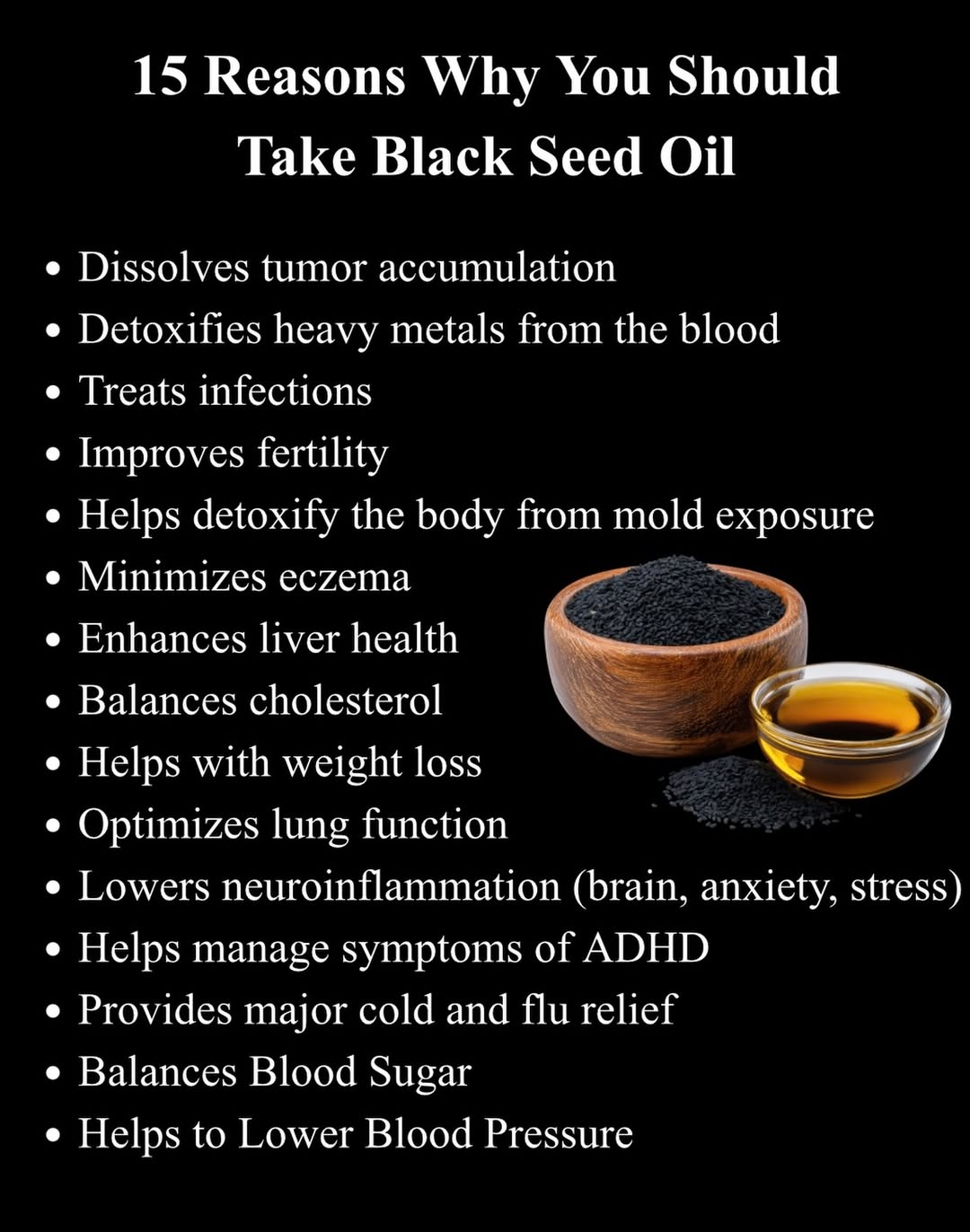
Black seed oil, extracted from the seeds of Nigella sativa, has been used for centuries in traditional medicine across the Middle East, Africa, and South Asia. It’s often called a “cure-all,” but modern science paints a more nuanced and grounded picture.
The main active compound in black seed oil is thymoquinone, which has antioxidant, anti-inflammatory, and antimicrobial properties. These effects explain many — but not all — of the claimed benefits.
Let’s go through them carefully.
What Black Seed Oil May Help With (Supported or Partially Supported)
1. Inflammation & Immune Support
Black seed oil has anti-inflammatory and antioxidant effects, which may:
Support immune function
Reduce low-grade chronic inflammation
Help with inflammatory conditions like arthritis (mildly)
This is one of its strongest areas of evidence.
2. Blood Sugar Regulation
Some studies show modest improvements in:
Fasting blood glucose
Insulin sensitivity
This may help support blood sugar balance, especially in people with insulin resistance — but it does not replace diabetes treatment.
3. Cholesterol & Heart Health
Evidence suggests it may:
Slightly lower LDL (“bad”) cholesterol
Improve triglyceride levels
Modestly support blood pressure regulation
Effects are small but real, especially when combined with diet and exercise.
4. Asthma & Lung Function
Black seed oil has mild bronchodilator and anti-inflammatory effects, which may help:
Reduce asthma symptoms
Improve breathing comfort
This supports its traditional use — but it is not a substitute for inhalers or prescribed medication.
5. Skin Conditions (Eczema, Acne)
Topical or oral use may:
Reduce skin inflammation
Improve eczema symptoms
Help acne through antimicrobial action
Results vary, but evidence is reasonable here.
6. Mild Weight Management Support
Black seed oil may:
Slightly reduce appetite
Improve metabolic markers
However, fat loss is minimal without diet and lifestyle changes.
Claims That Are Exaggerated or Misleading
❌ “Dissolves Tumors”
There is no human clinical evidence that black seed oil dissolves tumors.
Lab and animal studies show anti-cancer potential
This does not translate to curing or shrinking tumors in people
⚠️ This claim is dangerous if taken literally
❌ “Detoxifies Heavy Metals from Blood”
The body detoxifies through the liver and kidneys, not oils or supplements.
No clinical proof black seed oil removes heavy metals
No evidence it treats mold toxicity
This is a wellness myth, not science.
❌ “Treats Infections”
Black seed oil has antimicrobial properties, but:
It does not cure bacterial, viral, or systemic infections
It cannot replace antibiotics or antivirals
At best, it may support immune response.
❌ “Treats ADHD”
There is very limited and preliminary research suggesting cognitive or anti-inflammatory benefits.
No solid evidence for ADHD treatment
Should never replace medical care
❌ “Major Cold and Flu Relief”
It may:
Ease symptoms slightly
Support immune response
But it does not prevent or cure viral infections.
Liver Health: A Careful Yes
Some studies suggest black seed oil may:
Reduce oxidative stress in the liver
Support liver enzymes
However, high doses can stress the liver, especially when combined with medications.
Moderation matters.
Safety, Dosage & Who Should Avoid It
Typical Dosage (General Use)
½ to 1 teaspoon per day
With food to reduce stomach upset
Possible Side Effects
Digestive discomfort
Lower blood sugar or blood pressure (can interact with meds)
Rare allergic reactions
Avoid or Use Caution If You:
Are pregnant
Take blood pressure, diabetes, or blood-thinning medications
Have liver or kidney disease
Always talk to a healthcare provider if unsure.
Bottom Line
✔ Black seed oil can support:
Inflammation control
Immune health
Blood sugar and cholesterol balance
Mild skin and respiratory issues
❌ It does not:
Cure cancer
Detox heavy metals or mold
Replace medications
Act as a miracle supplement
Think of black seed oil as a supportive tool, not a treatment.