
Eating healthy foods is important — but when you eat can be just as important as what you eat. Meal timing plays a key role in digestion, metabolism, energy levels, weight management, and overall health.
In this complete guide, we’ll explore the best times to eat breakfast, lunch, dinner, and snacks, along with expert-backed tips to help you optimize your daily eating schedule.
Why Meal Timing Matters
Your body follows a natural internal clock called the circadian rhythm. This rhythm controls sleep, hormones, digestion, and metabolism. Eating at the right times helps your body:
Burn calories more efficiently
Maintain stable blood sugar levels
Improve digestion
Boost energy levels
Support weight management
Improve sleep quality
Irregular eating habits can disrupt metabolism and increase the risk of weight gain, fatigue, and digestive issues.
🍳 Best Time to Eat Breakfast
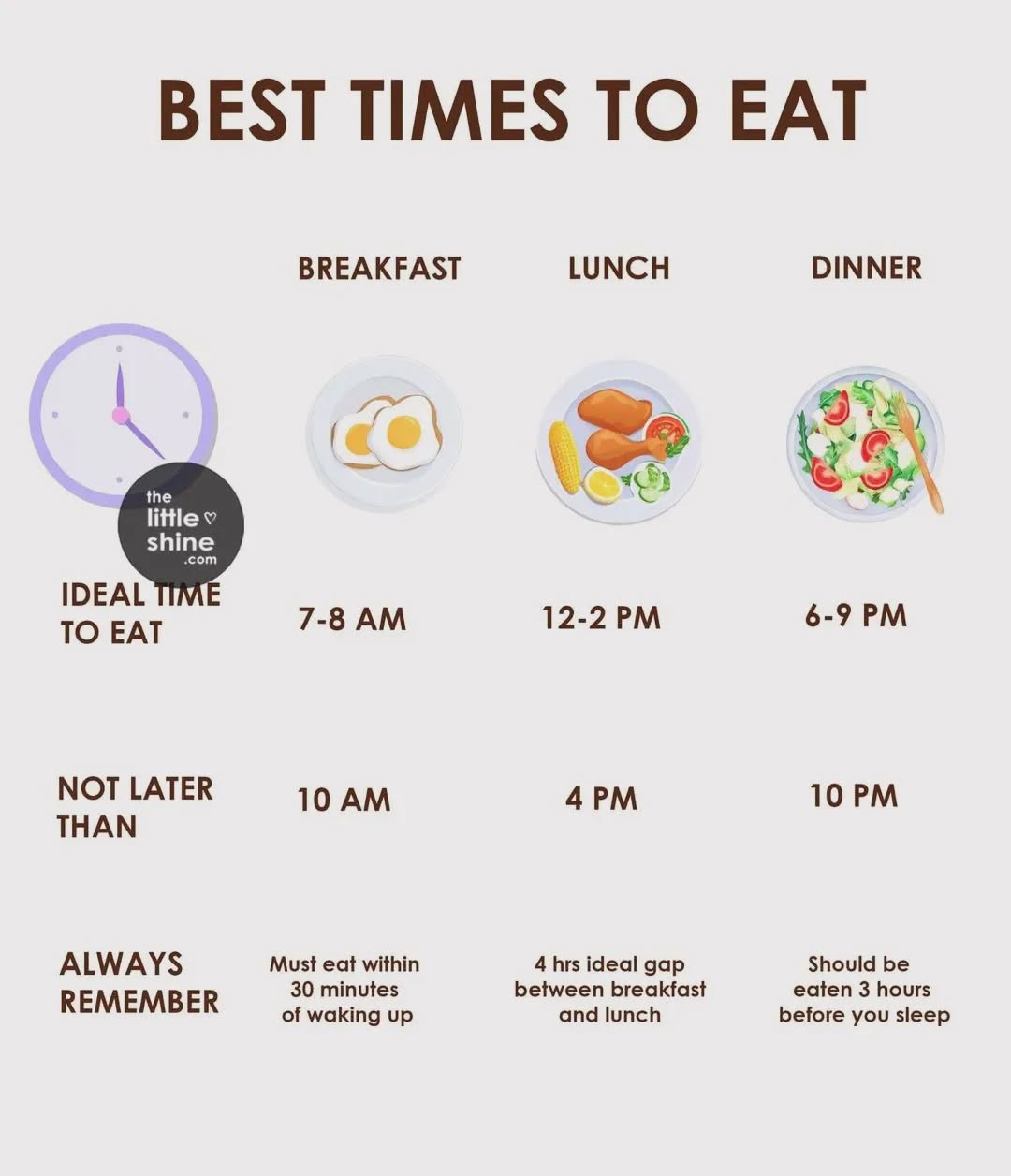
⏰ Ideal Time: Within 1–2 Hours After Waking Up (6:00 AM – 9:00 AM)
Breakfast jumpstarts your metabolism and gives your body energy for the day.
Benefits of Eating Breakfast on Time:
Improves concentration and productivity
Stabilizes blood sugar
Reduces overeating later in the day
Supports healthy weight management
What to Include:
Protein (eggs, yogurt, nuts)
Fiber (whole grains, fruits)
Healthy fats (avocado, seeds)
Skipping breakfast may slow metabolism and increase cravings later in the day.
🥗 Best Time to Eat Lunch
⏰ Ideal Time: 12:00 PM – 2:00 PM
Lunch should be eaten about 4–5 hours after breakfast. This is when your metabolism is still strong.
Why Lunch Timing Matters:
Prevents afternoon energy crashes
Maintains stable blood sugar
Supports digestive health
Helps avoid late-night overeating
Healthy Lunch Tips:
Include lean protein
Add vegetables and fiber
Avoid heavy fried foods
Eating lunch too late may increase hunger and cause unhealthy snacking.
🍽 Best Time to Eat Dinner
⏰ Ideal Time: 6:00 PM – 8:00 PM
(At least 2–3 hours before bedtime)
Eating dinner too late can negatively affect digestion, sleep, and weight management.
Benefits of Early Dinner:
Better digestion
Improved sleep quality
Reduced acid reflux
Better weight control
Your metabolism slows down at night. Late-night eating can lead to fat storage and poor sleep.
🍎 Best Time for Snacks
Mid-Morning Snack: 10:00 AM – 11:00 AM
Evening Snack: 3:00 PM – 4:00 PM
Healthy snacks help:
Prevent overeating at main meals
Maintain energy levels
Support blood sugar balance
Smart Snack Options:
Nuts and seeds
Fruits
Greek yogurt
Boiled eggs
Avoid sugary snacks, especially at night.
🌙 Should You Eat Before Bed?
Eating right before sleep is not recommended. Late-night meals can:
Disrupt sleep
Cause weight gain
Trigger acid reflux
Slow digestion
If you are truly hungry, choose a light snack like:
A banana
Warm milk
A handful of almonds
🕒 Ideal Meal Timing for Weight Loss
If your goal is weight loss:
Eat breakfast within 1 hour of waking
Maintain 4–5 hours between meals
Avoid eating after 8:00 PM
Consider early dinners
Stay consistent daily
Consistency is more important than strict timing.
⚡ Best Eating Schedule Example
Here’s a balanced daily eating routine:
7:30 AM – Breakfast
10:30 AM – Light Snack
1:00 PM – Lunch
4:00 PM – Healthy Snack
7:00 PM – Dinner
This schedule supports stable energy, digestion, and metabolism.
🚨 Common Meal Timing Mistakes
Skipping breakfast
Eating heavy meals late at night
Long gaps between meals
Constant snacking
Irregular eating times
Fixing these habits can significantly improve your overall health.
🧠 Final Thoughts
The best time to eat your meals depends on your lifestyle, work schedule, and sleep routine. However, following these general guidelines can improve digestion, boost metabolism, and support long-term health.
Remember:
✔ Eat within 1–2 hours of waking
✔ Keep 4–5 hours between meals
✔ Eat dinner 2–3 hours before bed
✔ Stay consistent daily
Healthy eating isn’t just about food choices — it’s also about smart timing.