
Building a healthier lifestyle doesn’t require extreme diets, expensive gym memberships, or impossible routines. Small daily habits can create long-term improvements in your physical health, mental well-being, and energy levels. The key is consistency, not perfection.
If you’re just starting your wellness journey, these five essential habits are simple, beginner-friendly, and easy to include in your everyday routine.
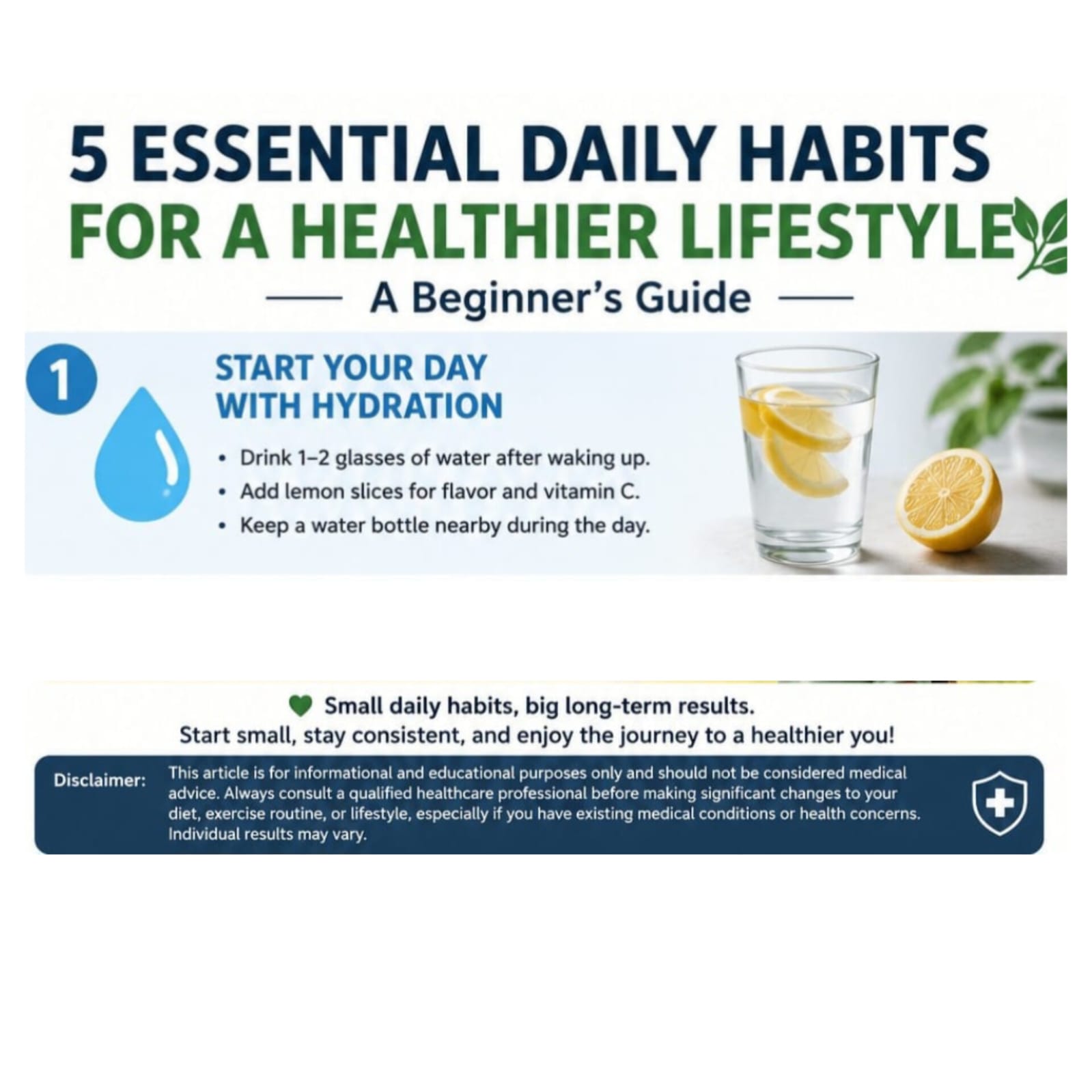
1. Start Your Day with Hydration

After several hours of sleep, your body naturally becomes dehydrated. Drinking water first thing in the morning helps wake up your system, supports digestion, improves circulation, and boosts energy levels.
Easy Tips:
Drink 1–2 glasses of water after waking up
Add lemon slices for flavor and vitamin C
Keep a water bottle nearby during the day
Staying hydrated can also help reduce fatigue, headaches, and unnecessary snacking caused by thirst.
2. Move Your Body Every Day

You don’t need intense workouts to become healthier. Simple daily movement can improve heart health, strengthen muscles, support weight management, and reduce stress.
Beginner-Friendly Activities:
20–30 minute walks
Stretching exercises
Light yoga
Dancing at home
Taking the stairs instead of the elevator
Consistency matters more than intensity. Even small amounts of movement every day can make a huge difference over time.
3. Eat More Whole Foods

A balanced diet is one of the most powerful tools for better health. Focus on eating more natural, nutrient-rich foods while reducing highly processed snacks and sugary drinks.
Include More:
Fresh fruits and vegetables
Whole grains
Lean proteins
Healthy fats like nuts and olive oil
Try to Limit:
Fast food
Sugary beverages
Excessive processed snacks
Foods high in added sugar
Healthy eating doesn’t mean strict restriction. It’s about creating sustainable choices that nourish your body.
4. Prioritize Quality Sleep

Sleep is essential for recovery, brain function, immunity, and emotional health. Poor sleep can affect mood, concentration, appetite, and overall wellness.
Healthy Sleep Habits:
Aim for 7–9 hours of sleep nightly
Keep a consistent bedtime
Avoid screens before bed
Reduce caffeine late in the day
Create a calm sleeping environment
Good sleep can improve productivity, support healthy aging, and help your body recover properly.
5. Manage Stress in Healthy Ways

Stress is a normal part of life, but chronic stress can negatively impact both mental and physical health. Learning healthy coping strategies is important for long-term wellness.
Simple Stress-Relief Ideas:
Deep breathing exercises
Meditation or mindfulness
Journaling
Spending time outdoors
Listening to relaxing music
Talking with supportive friends or family
Even 10 minutes of relaxation daily can help improve mood and reduce tension.
Why Small Habits Matter
Many people fail because they try to change everything at once. Sustainable health improvements come from small daily actions repeated consistently over time.
Instead of aiming for perfection:
Focus on progress
Build one habit at a time
Celebrate small wins
Stay patient with yourself
Healthy living is a long-term journey, not a quick fix.
Final Thoughts
Improving your lifestyle doesn’t have to be complicated. Drinking more water, moving daily, eating nutritious foods, sleeping better, and managing stress are simple habits that can transform your health over time.
Start with one habit today. Once it becomes part of your routine, add another. Small changes can lead to powerful results when practiced consistently.
Disclaimer

This article is for informational and educational purposes only and should not be considered medical advice. Always consult a qualified healthcare professional before making significant changes to your diet, exercise routine, or lifestyle, especially if you have existing medical conditions or health concerns. Individual results may vary, and the information provided is not intended to diagnose, treat, cure, or prevent any disease.