
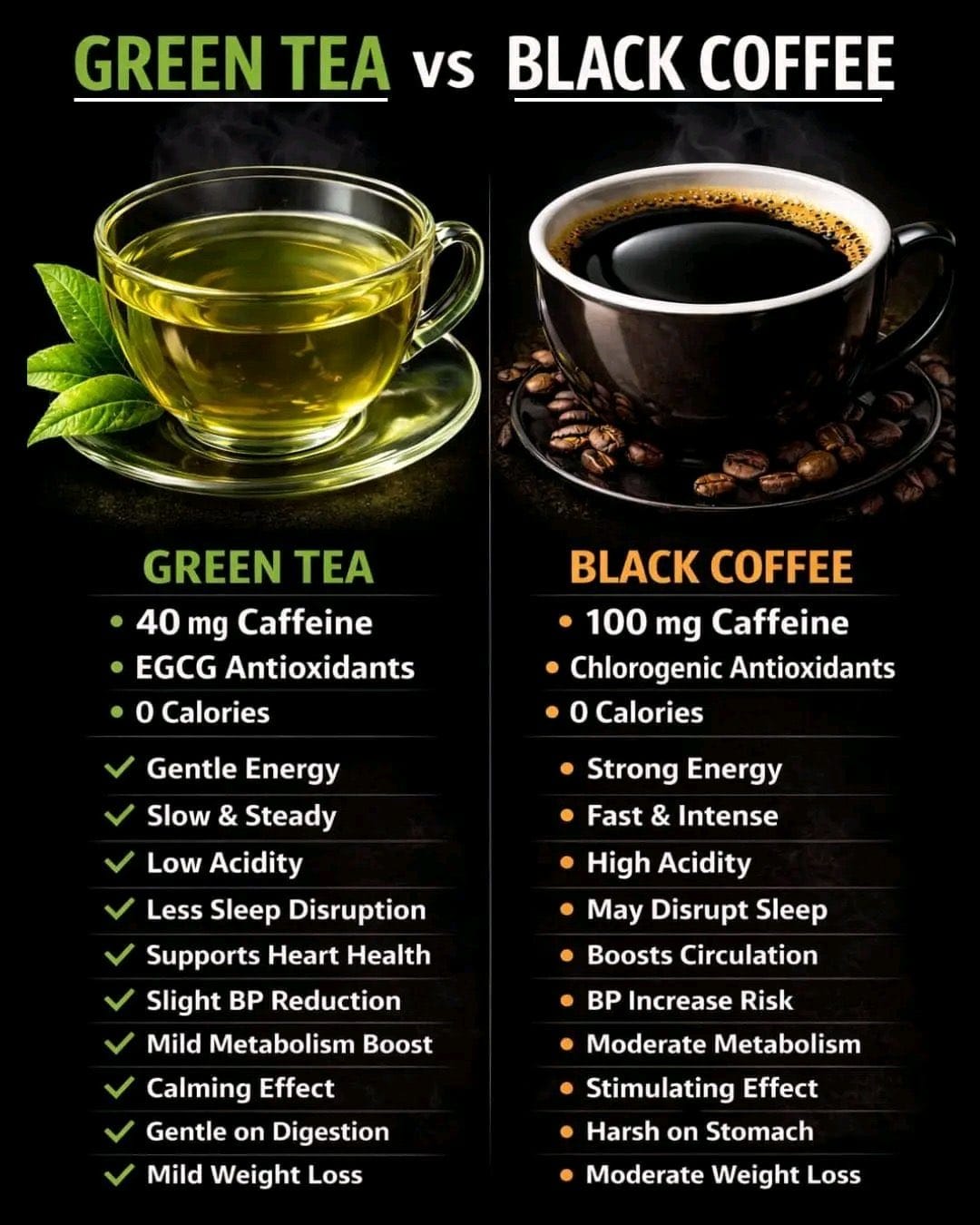
Tea is one of the most consumed beverages in the world — second only to water. Among all varieties, green tea and black tea are the most popular. While they both come from the same plant (Camellia sinensis), their processing methods create major differences in taste, caffeine content, antioxidants, and health benefits.
If you’ve ever wondered which one is better for energy, weight loss, heart health, or overall wellness — this complete guide will break it down clearly.
What Is the Difference Between Green Tea and Black Tea?
Both green tea and black tea come from the same plant. The key difference lies in oxidation — the process where tea leaves are exposed to air.
- Green tea is minimally oxidized.
- Black tea is fully oxidized.
This single step changes their color, flavor, and nutritional profile.
How They’re Processed
Green Tea Processing
- Leaves are harvested.
- Quickly heated (steamed or pan-fired) to prevent oxidation.
- Dried and packaged.
Result: Light color, grassy flavor, higher catechin antioxidants.
Black Tea Processing
- Leaves are harvested.
- Rolled to break cell walls.
- Fully oxidized (turn dark brown/black).
- Dried.
Result: Bold flavor, darker color, higher caffeine, different antioxidants.
Nutritional & Chemical Differences
Antioxidants
Green Tea
- Rich in catechins
- High in EGCG (Epigallocatechin gallate)
- Strong anti-inflammatory properties
Black Tea
- Contains theaflavins and thearubigins
- Powerful for heart health
- Good antioxidant capacity
Green tea has slightly higher antioxidant concentration, but both are beneficial.
Caffeine Content: Which Has More?
- Green tea: 25–40 mg per cup
- Black tea: 40–70 mg per cup
Black tea generally has nearly double the caffeine of green tea.
If you’re sensitive to caffeine, green tea is usually the gentler option.
Health Benefits Comparison
1. Weight Loss
Green tea is often associated with fat burning due to EGCG and mild caffeine stimulation. It may help increase metabolism slightly.
Black tea may support weight management by improving gut bacteria balance.
Winner for weight loss: Green tea
2. Heart Health
Both teas support cardiovascular health.
Green tea:
- May reduce LDL cholesterol
- Supports blood vessel function
Black tea:
- May improve blood pressure
- Supports circulation
Winner: Tie (both excellent)
3. Brain Function
Both contain caffeine and L-theanine, which together:
- Improve focus
- Promote calm alertness
- Enhance reaction time
Black tea provides stronger stimulation.
Green tea provides smoother energy.
4. Gut Health
Black tea’s theaflavins may promote healthy gut bacteria.
Green tea also supports digestion but is milder.
5. Cancer-Fighting Potential
Green tea has been studied more extensively for its high EGCG levels and potential anti-cancer properties.
Research is still ongoing for both types.
Taste Differences
Green Tea:
- Light
- Grassy
- Slightly bitter
- Fresh
Black Tea:
- Bold
- Malty
- Strong
- Slightly sweet or smoky (depending on type)
If you prefer strong coffee-like intensity, black tea may suit you better.
Which Is Better for Energy?
If you need:
- Strong morning boost → Black tea
- Calm focus without jitters → Green tea
Green tea’s lower caffeine plus L-theanine creates smoother energy.
Which Tea Is Better for Skin?
Green tea is often used in skincare because of:
- Anti-inflammatory properties
- Acne support
- Anti-aging antioxidants
Black tea also supports skin health but is less commonly used in products.
Winner for skin: Green tea
Which Is Better for Stress?
Both teas contain L-theanine, an amino acid that promotes relaxation.
Green tea has slightly higher L-theanine content, making it better for stress reduction.
Side Effects to Consider
Both teas may cause:
- Acid reflux (if consumed on empty stomach)
- Iron absorption reduction
- Insomnia (if consumed late)
Excess consumption may cause:
- Headaches
- Digestive discomfort
- Increased heart rate
Moderation is key.
Who Should Choose Green Tea?
Green tea may be ideal for:
- People sensitive to caffeine
- Those focused on weight loss
- Individuals seeking anti-aging benefits
- Those managing stress
Who Should Choose Black Tea?
Black tea may be better for:
- Those needing stronger energy
- Coffee alternatives
- People who prefer bold flavors
- Morning drinkers
Can You Drink Both?
Absolutely.
Many people drink:
- Black tea in the morning
- Green tea in the afternoon
This balances energy and antioxidants throughout the day.
Popular Types of Each
Green Tea Varieties
- Sencha
- Matcha
- Jasmine green tea
- Dragon Well (Longjing)
Black Tea Varieties
- Assam
- Darjeeling
- English Breakfast
- Earl Grey
Each type has slightly different flavor and caffeine levels.
Final Verdict: Green Tea vs Black Tea
There is no single “better” tea — it depends on your goals.
Choose green tea if you want:
- Higher antioxidants
- Weight management support
- Calmer energy
- Skin benefits
Choose black tea if you want:
- Stronger caffeine boost
- Bold taste
- Heart health support
- Coffee alternative
Both are healthy additions to your diet when consumed in moderation.
Conclusion
Green tea and black tea both offer impressive health benefits, thanks to their antioxidant content and natural compounds. The main differences come down to oxidation, caffeine content, taste, and specific health focuses.
If possible, include both in your routine to enjoy the best of both worlds.
Leave a Reply