
Fasting Timeline: What Really Happens in Your Body During a Fast?
Intermittent fasting has become one of the most popular health trends in recent years, with many people using it to support weight management, improve metabolic health, and simplify their eating habits. While fasting may seem straightforward—simply going without food for a period of time—your body undergoes a series of fascinating physiological changes as the hours pass.
Understanding what happens during each stage of fasting can help you make informed decisions and set realistic expectations. Here’s a closer look at the fasting timeline and the science behind it.
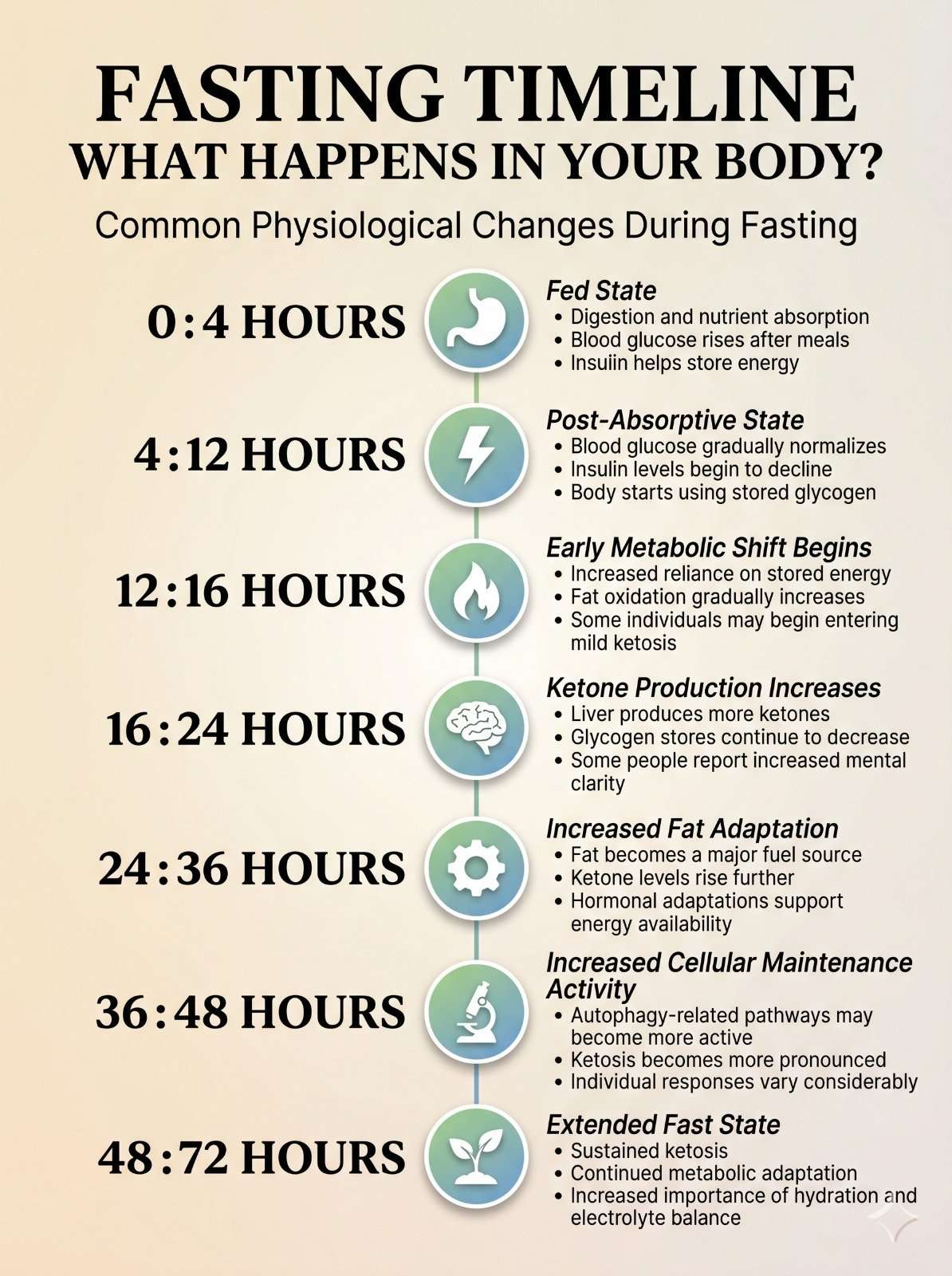
The First 4 Hours: The Fed State
After eating, your body enters the fed state, during which digestion and nutrient absorption are actively taking place.
What Happens?
Food is broken down into glucose, amino acids, and fatty acids.
Blood sugar levels rise.
The pancreas releases insulin to help move glucose into cells.
Excess energy is stored as glycogen in the liver and muscles.
At this stage, your body primarily relies on the nutrients from your most recent meal for energy.
4–12 Hours: The Post-Absorptive State
Several hours after your last meal, digestion slows and blood sugar begins returning to normal levels.
What Happens?
Insulin levels gradually decline.
The body starts tapping into stored glycogen for energy.
Hunger hormones may begin increasing.
Energy remains relatively stable for most healthy individuals.
This is the stage many people experience overnight while sleeping.
12–16 Hours: Early Metabolic Shift
As glycogen stores continue to be used, the body begins shifting toward alternative energy sources.
What Happens?
Fat oxidation starts to increase.
The body becomes less dependent on incoming food.
Some individuals may begin producing small amounts of ketones.
Insulin levels continue to decrease.
This stage is often associated with common intermittent fasting protocols such as 16:8 fasting.
16–24 Hours: Ketone Production Increases
By this point, glycogen stores have declined further and fat metabolism becomes more significant.
What Happens?
The liver increases ketone production.
Fat stores begin contributing more energy.
Some people report improved focus and mental clarity.
Blood sugar remains tightly regulated by the body.
Although ketones are increasing, the degree varies greatly between individuals depending on diet, activity level, and metabolic health.
24–36 Hours: Increased Fat Adaptation
As fasting continues, the body becomes increasingly efficient at utilizing fat as fuel.
What Happens?
Fat becomes a major energy source.
Ketone levels rise further.
Hormonal changes help preserve energy balance.
The body becomes more metabolically flexible.
At this stage, hydration becomes increasingly important.
36–48 Hours: Enhanced Cellular Maintenance
Research suggests that longer fasting periods may activate various cellular maintenance processes.
What Happens?
Autophagy-related pathways may become more active.
Ketosis becomes more pronounced.
Cells begin adapting to the low-energy environment.
Individual responses vary considerably.
Scientists continue to study the exact timing and extent of these processes in humans.
48–72 Hours: Extended Fast State
During prolonged fasting, the body relies heavily on stored energy reserves.
What Happens?
Sustained ketosis occurs.
Metabolic adaptation continues.
Fat remains the primary fuel source.
Electrolyte and hydration management become critical.
Extended fasts should be approached with caution and are not appropriate for everyone.
Potential Benefits of Intermittent Fasting
Research suggests that fasting may offer several benefits when practiced safely:
Improved insulin sensitivity
Support for weight management
Better blood sugar regulation
Reduced calorie intake
Potential improvements in metabolic health
Increased awareness of hunger and eating patterns
However, results vary from person to person.
Who Should Avoid Fasting?
Fasting may not be suitable for:
Pregnant or breastfeeding women
Children and adolescents
Individuals with a history of eating disorders
People with certain medical conditions
Those taking medications that affect blood sugar
Anyone advised against fasting by a healthcare professional
Tips for a Safe Fasting Experience
1. Stay well hydrated.
2. Prioritize nutrient-dense meals during eating windows.
3. Get adequate sleep.
4. Avoid excessive fasting durations when starting out.
5. Listen to your body’s signals.
6. Consult a healthcare provider if you have medical concerns.
Conclusion
Fasting triggers a gradual transition from using recently consumed food for energy to relying on stored glycogen and, eventually, body fat. While many people find intermittent fasting beneficial, the body’s response can vary significantly based on genetics, diet, activity level, and overall health. Understanding the fasting timeline can help you approach fasting more safely and effectively while maintaining realistic expectations about its potential benefits.
—
Medical Disclaimer
The information in this article is for educational and informational purposes only and should not be considered medical advice. It is not intended to diagnose, treat, cure, or prevent any disease. Always consult a qualified healthcare professional before starting any fasting regimen, especially if you are pregnant, breastfeeding, have a medical condition, take prescription medications, or have concerns about your health. Individual results and responses to fasting may vary.