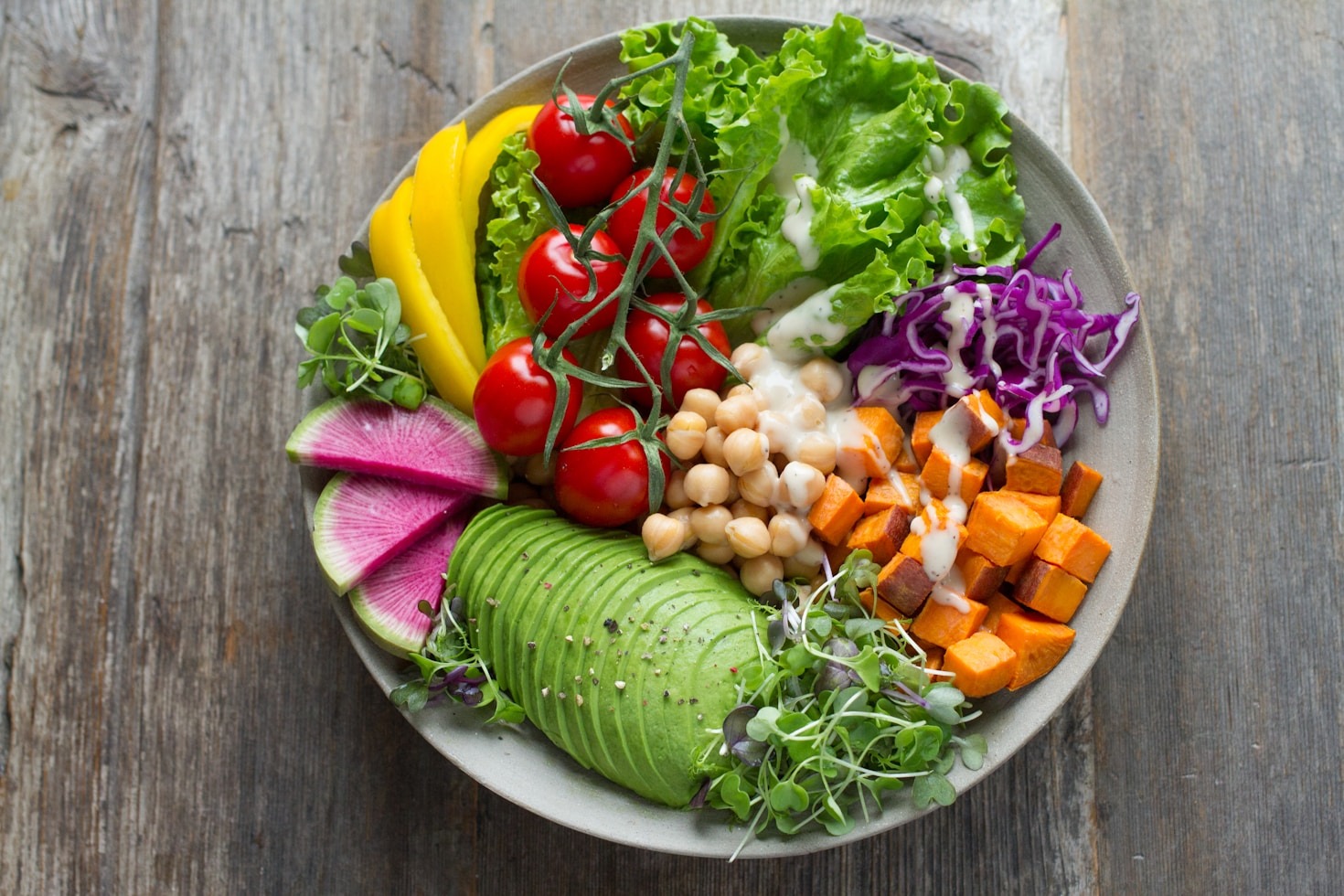

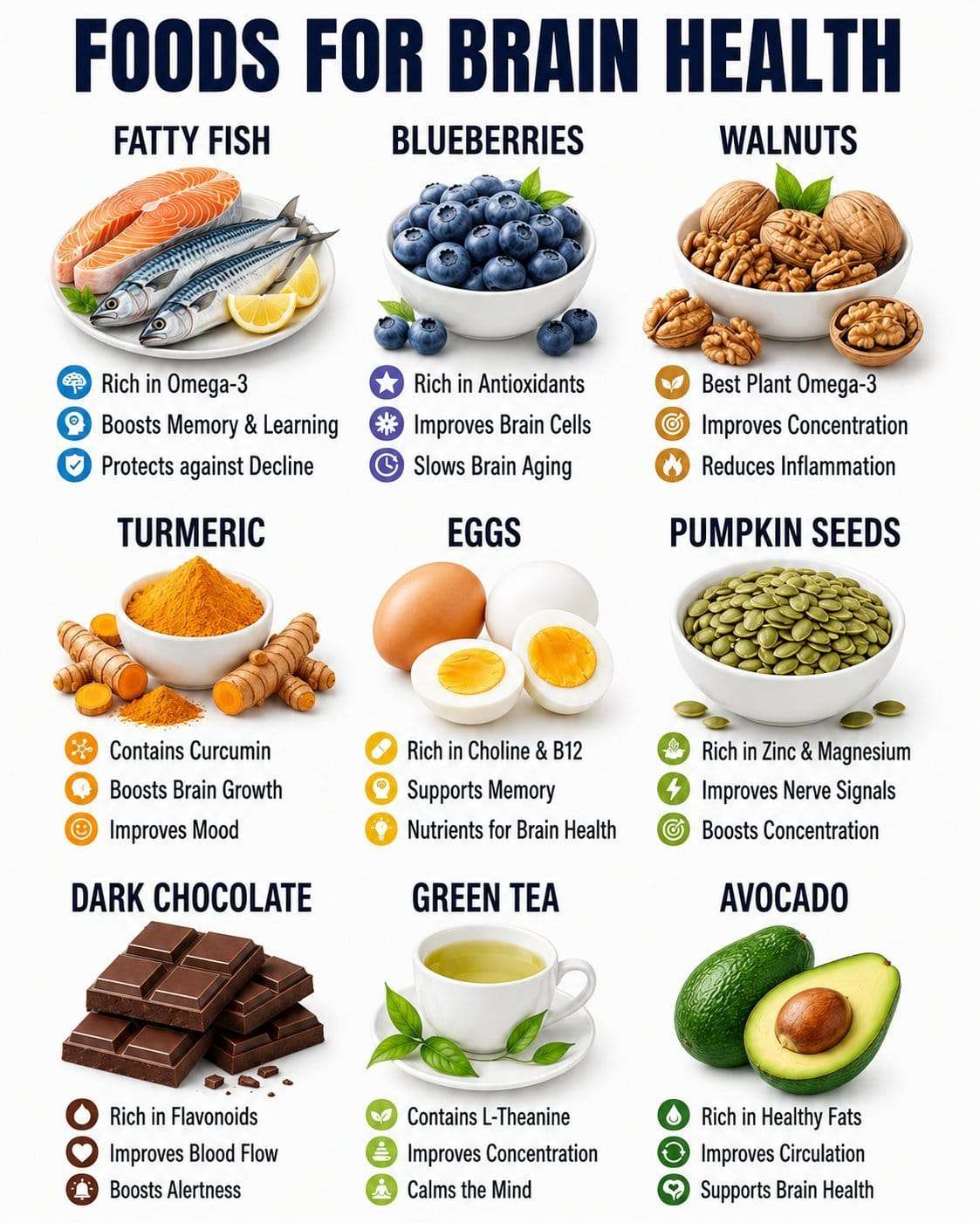
Eating for brain health means focusing on nutrient-rich foods like fatty fish, leafy greens, berries, nuts, and whole grains, which support memory, concentration, and long-term cognitive function. These foods provide omega-3s, antioxidants, vitamins, and minerals that protect brain cells and improve circulation.
🧠 Top Foods for Brain Health
1. Leafy Greens & Cruciferous Vegetables
- Examples: Spinach, kale, broccoli, Brussels sprouts.
- Rich in vitamin K, folate, beta carotene, and antioxidants.
- Help slow cognitive decline and protect against free radical damage.
2. Fatty Fish
- Examples: Salmon, trout, sardines, cod.
- High in omega-3 fatty acids (DHA), essential for building brain cells.
- Linked to lower risk of Alzheimer’s and improved memory.
3. Berries
- Examples: Blueberries, strawberries, grapes.
- Contain flavonoids and anthocyanins that improve memory and delay age-related decline.
- Regular intake may delay memory loss by up to 2.5 years.
4. Nuts & Seeds
- Walnuts, almonds, pistachios, flaxseeds.
- Provide healthy fats, vitamin E, and omega-3 ALA.
- Improve cognitive test scores and support heart-brain health.
5. Eggs
- Rich in choline, which supports memory and communication between brain cells.
- Also contain tryptophan, aiding serotonin production for mood balance.
6. Whole Grains & Legumes
- Examples: Oats, chickpeas, black beans, whole wheat.
- Provide steady glucose supply for brain energy.
- High in folate and fiber, supporting circulation and memory.
7. Coffee & Tea
- Contain caffeine and antioxidants.
- Boost alertness, concentration, and may help solidify new memories.
8. Dark Chocolate
- Rich in flavonoids and caffeine.
- Improves blood flow to the brain, enhancing focus and memory.
⚠️ Risks & Considerations
- Balance is key: Overconsumption of caffeine or chocolate can cause jitters or sleep issues.
- Mercury in fish: Choose low-mercury options like salmon or sardines.
- Allergies: Nuts and eggs may trigger reactions in sensitive individuals.
✅ Practical Tips
- Aim for 2 servings of fatty fish per week.
- Include a handful of nuts daily.
- Add berries to breakfast or smoothies.
- Drink coffee or tea in moderation (1–2 cups/day).
- Build meals around whole grains and leafy greens for sustained energy.
📌 Disclaimer
This article is for educational purposes only and is not a substitute for professional medical advice. Dietary needs vary by individual health conditions, age, and lifestyle. Always consult a qualified healthcare provider or nutritionist before making significant changes to your diet.