
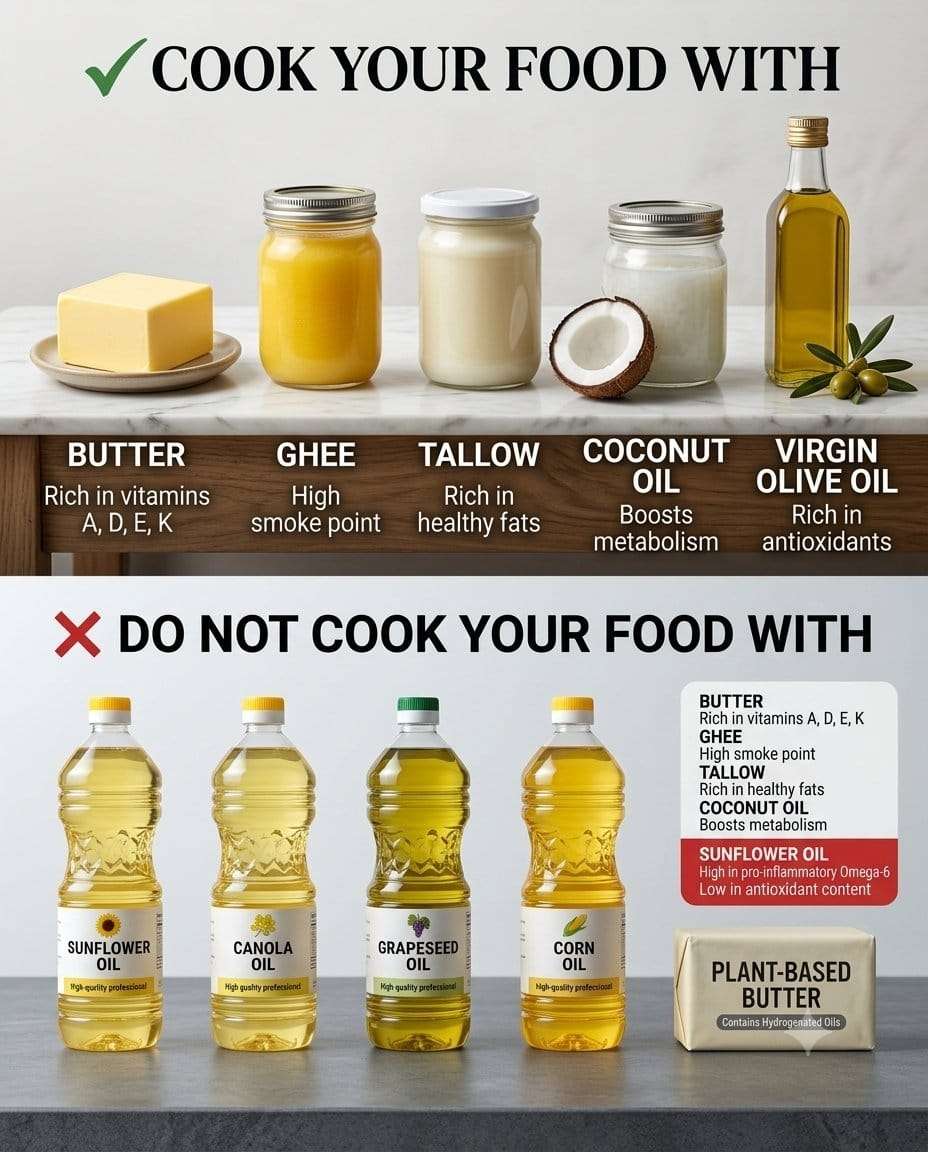
The healthiest oils for cooking are those rich in unsaturated fats and stable under heat, such as extra virgin olive oil and avocado oil, while the worst are trans fats and highly processed oils like partially hydrogenated oils and palm oil. Choosing the right oil depends on both its fat profile and smoke point.
🧴 Good Oils for Cooking
✅ Best Everyday Choices
- Extra Virgin Olive Oil
- High in monounsaturated fats and antioxidants.
- Supports heart health and reduces inflammation.
- Best for low-to-medium heat cooking (sautéing, baking, dressings).
- Smoke point: ~375–410°F.
- Avocado Oil
- Rich in oleic acid and vitamins E & K.
- Very high smoke point (~520°F), ideal for frying and grilling.
- Neutral flavor, versatile for cooking and baking.
- Sesame Oil
- Contains antioxidants (sesamolin, sesamin) that support cholesterol control.
- Nutty flavor, great for stir-frying, marinades, and finishing dishes.
- Smoke point: 350–450°F depending on refinement.
- Safflower Oil
- High in unsaturated fats, stable at high heat.
- Good for frying and roasting.
🚫 Oils to Limit or Avoid
- Trans Fats / Hydrogenated Oils
- Found in margarine, shortening, processed foods.
- Strongly linked to heart disease, inflammation, and insulin resistance.
- Should be avoided completely.
- Palm Oil
- High in saturated fat, less stable for health.
- Often used in processed foods, linked to cholesterol issues.
- Flaxseed & Walnut Oils
- Rich in omega-3s but fragile under heat.
- Best used cold (salad dressings, dips).
- Fish Oil
- Nutritionally beneficial but unsuitable for cooking due to low smoke point.
- Better consumed as a supplement.
📊 Comparison Table
| Oil Type | Fat Profile | Smoke Point | Best Use | Avoid/Limit |
|---|---|---|---|---|
| Extra Virgin Olive | Monounsaturated + antioxidants | 375–410°F | Dressings, sautéing | No |
| Avocado | Monounsaturated, vitamins E & K | 480–520°F | Frying, grilling | No |
| Sesame | Polyunsaturated + antioxidants | 350–450°F | Stir-fry, marinades | No |
| Safflower | Unsaturated fats | ~450°F | Frying, roasting | No |
| Coconut | Saturated fat | ~350°F | Baking, occasional frying | Limit |
| Palm | Saturated fat | ~450°F | Processed foods | Avoid |
| Flaxseed/Walnut | Omega-3 polyunsaturated | Low | Cold use only | Avoid for cooking |
| Hydrogenated Oils | Trans fats | Variable | None | Avoid completely |
⚠️ Risks & Trade-Offs
- High heat cooking requires oils with stable smoke points (avocado, refined olive, safflower).
- Nutrient loss occurs when fragile oils (flaxseed, walnut) are heated.
- Saturated fats (coconut, palm) are resistant to oxidation but should be consumed in moderation.
- Trans fats are universally harmful and should be eliminated from the diet.
📌 Disclaimer
This article is for educational purposes only. Nutritional needs vary by individual. Consult a healthcare provider or registered dietitian before making significant dietary changes.