
Simple Home Tests You Can Try (and What They Really Mean)
Honey is one of the most powerful natural foods on the planet — packed with antioxidants, enzymes, and antibacterial compounds. But not all honey sold today is real. Many products are diluted with sugar syrup, corn syrup, or artificial flavoring, reducing both health benefits and quality.
So how can you tell if your honey is pure or fake? Below are the most common home tests, what they show, and their limitations.
Why Fake Honey Is a Problem
Fake or adulterated honey may:
Spike blood sugar like refined sugar
Lack enzymes, antioxidants, and antibacterial properties
Be overheated or ultra-filtered, destroying nutrients
Contain additives or syrups instead of nectar
Pure honey, on the other hand:
Has natural enzymes and pollen
Supports immunity and digestion
Has antibacterial and anti-inflammatory effects
Crystallizes naturally over time
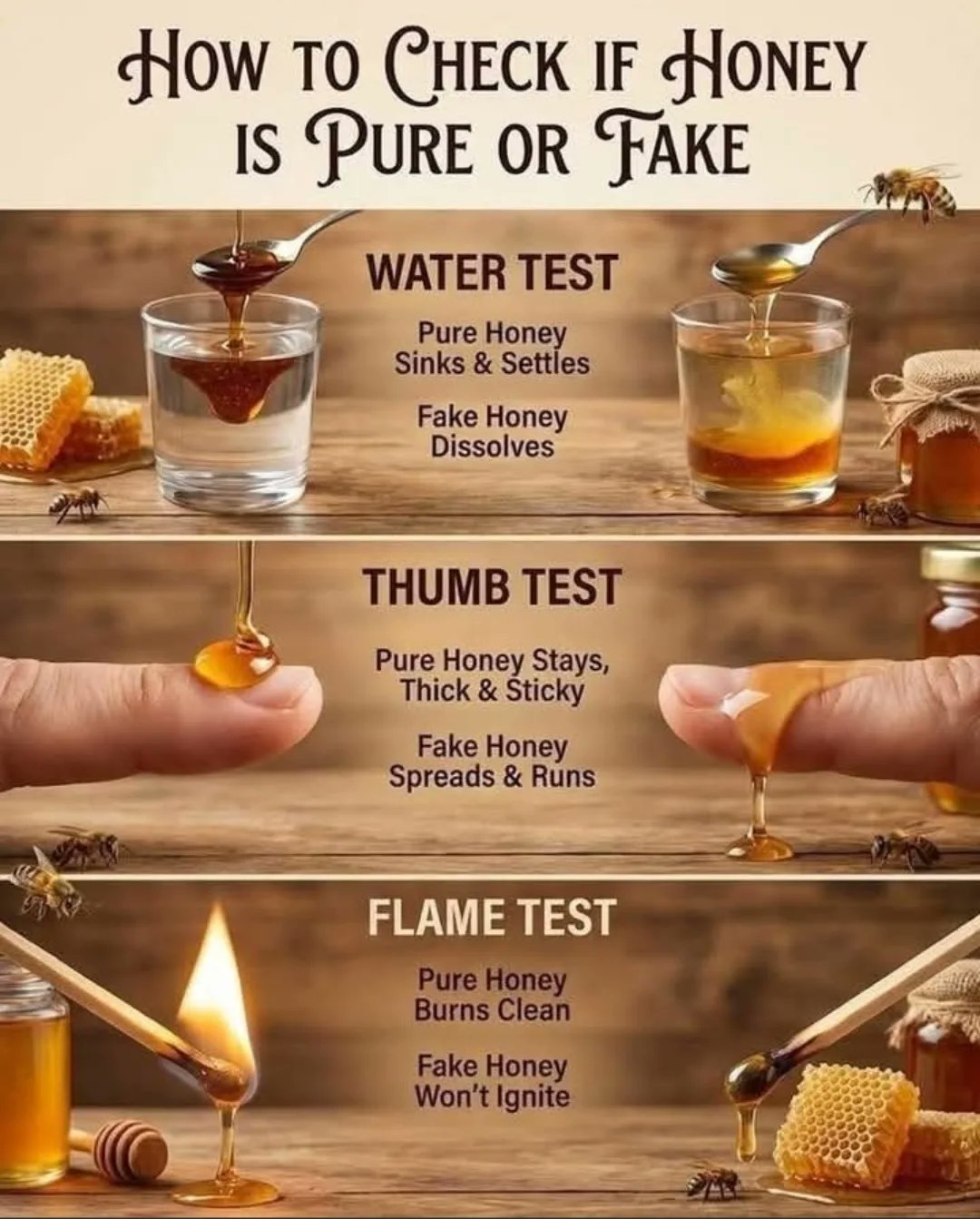
1. The Water Test
How to Do It
Fill a glass with room-temperature water
Add one spoon of honey
Observe what happens
Results
Pure honey: Sinks to the bottom and settles without dissolving quickly
Fake honey: Dissolves or spreads through the water
Why This Happens
Pure honey is dense and cohesive, while adulterated honey contains added water or syrups that dissolve easily.
⚠️ Note: Some raw honeys dissolve slowly over time — this test alone is not definitive.
2. The Thumb (Touch) Test
How to Do It
Put a drop of honey on your thumb
Tilt your hand slightly
Results
Pure honey: Stays thick, sticky, and doesn’t spread
Fake honey: Runs, spreads, or feels watery
Why This Happens
Pure honey has high viscosity due to its natural sugars and enzymes.
⚠️ Limitation: Temperature affects thickness — warm honey may flow more even if it’s pure.
3. The Flame Test (Use Caution ⚠️)
How to Do It
Dip a dry matchstick or cotton wick into honey
Try to light it
Results
Pure honey: May burn briefly
Fake honey: Usually won’t ignite due to moisture
Why This Happens
Pure honey has low moisture content, while adulterated honey often contains added water.
⚠️ Safety Warning: This test can be misleading and potentially dangerous. Moisture levels vary naturally.
Common Honey Myths (Important!)
❌ “Pure honey never crystallizes”
✔️ False. Raw, pure honey crystallizes naturally — it’s a good sign.
❌ “Dark honey is always real”
✔️ False. Color depends on flower source, not purity.
❌ “All supermarket honey is fake”
✔️ Not always, but many are ultra-filtered or blended.
The Most Reliable Ways to Identify Pure Honey
While home tests are helpful, the best indicators are:
✅ Labeled as Raw, Unfiltered, or Unpasteurized
✅ Lists only one ingredient: honey
✅ Purchased from local beekeepers
✅ Crystallizes over time
✅ Has a floral, complex aroma (not just sweet)
For absolute certainty, laboratory testing is the only foolproof method.
Final Verdict
Home tests like the water test, thumb test, and flame test can offer clues — but no single test guarantees purity. The smartest approach is to combine tests, buy from trusted sources, and understand how real honey behaves naturally.
Real honey doesn’t just taste better — it works better for your health.

Leave a Reply to Seed Cycling: A Natural Way to Support Hormone Balance - HealthTipsAcademy Cancel reply