
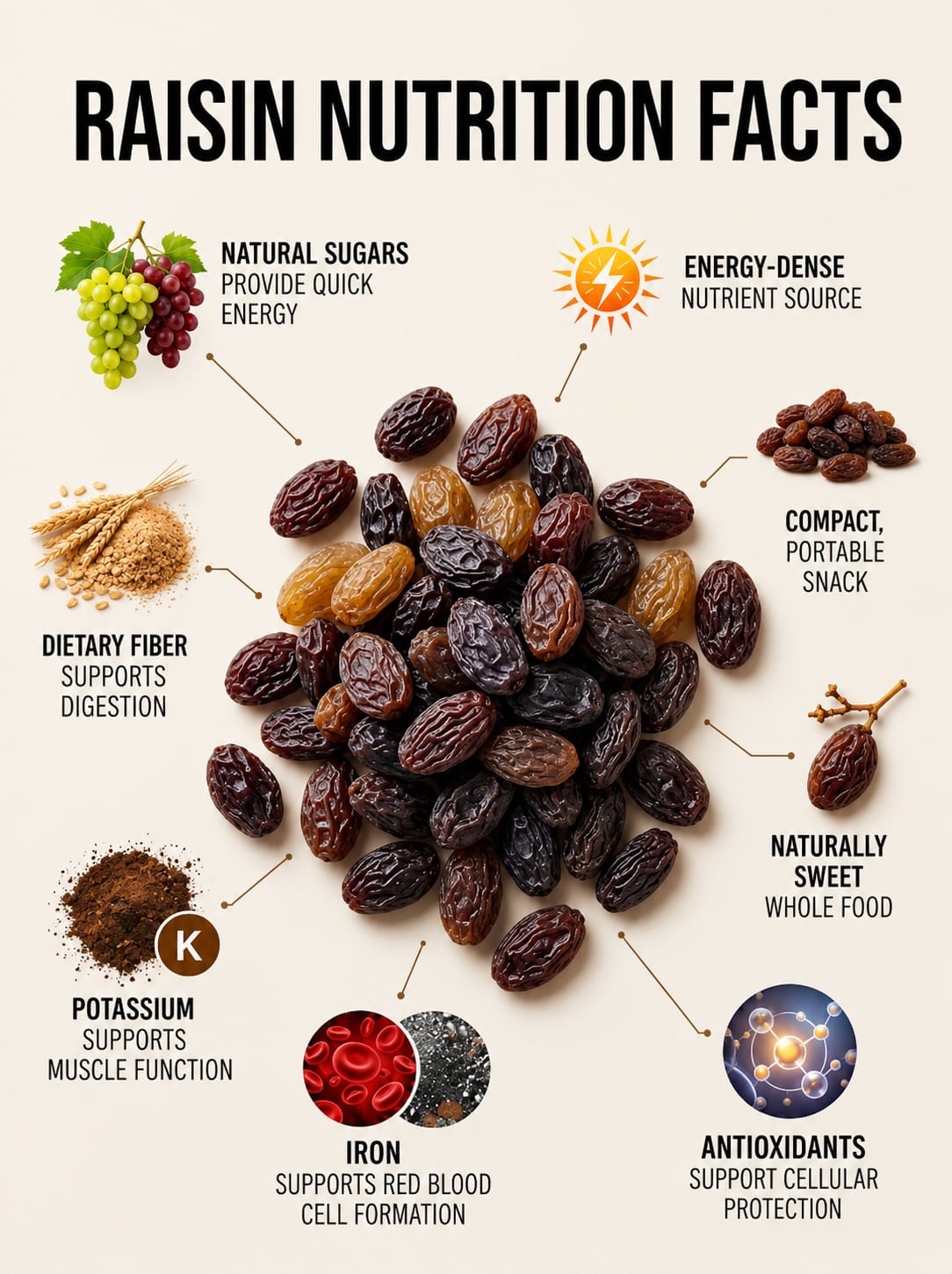
Raisins may be small, but they are packed with nutrients, natural sweetness, and energy. Made from dried grapes, raisins contain concentrated vitamins, minerals, fiber, and antioxidants that can support overall health when enjoyed in moderation.
Nutrition Facts of Raisins
A typical small serving of raisins (about 1 ounce or 28 grams) contains approximately:
Calories: 85
Carbohydrates: 22g
Natural Sugars: 17–18g
Fiber: 1–2g
Protein: 1g
Fat: 0g
Potassium: Around 220mg
Iron: Small amounts
Magnesium: Small amounts
Raisins are naturally low in fat and cholesterol-free.
Rich in Natural Energy
Because raisins are high in natural fruit sugars like glucose and fructose, they provide quick energy. This makes them a popular snack for athletes, students, and active people needing a fast energy boost.
Good Source of Fiber
Raisins contain both soluble and insoluble fiber, which may help support digestion and regular bowel movements. Fiber also helps you feel fuller for longer.
Packed With Antioxidants
Raisins contain plant compounds called polyphenols that help fight oxidative stress in the body. Antioxidants support healthy aging and overall wellness.
Supports Heart Health
The potassium and fiber found in raisins may help support healthy blood pressure and heart function when included as part of a balanced diet.
May Help Bone Health
Raisins contain minerals like calcium, magnesium, and boron, which play roles in maintaining healthy bones and supporting mineral balance in the body.
Easy Ways to Eat Raisins
Add to oatmeal or cereal
Mix into yogurt
Sprinkle over salads
Add to baked goods
Enjoy as a quick snack with nuts
Things to Keep in Mind
Although raisins are nutritious, they are also concentrated in natural sugar and calories because the water has been removed from the grapes. Eating moderate portions is usually the best approach. Sticky dried fruits can also cling to teeth, so good dental hygiene is important.
Final Thoughts
Raisins are a convenient and naturally sweet snack filled with fiber, antioxidants, and essential minerals. Whether added to breakfast, snacks, or recipes, they can be a healthy part of a balanced diet when enjoyed in reasonable amounts.