
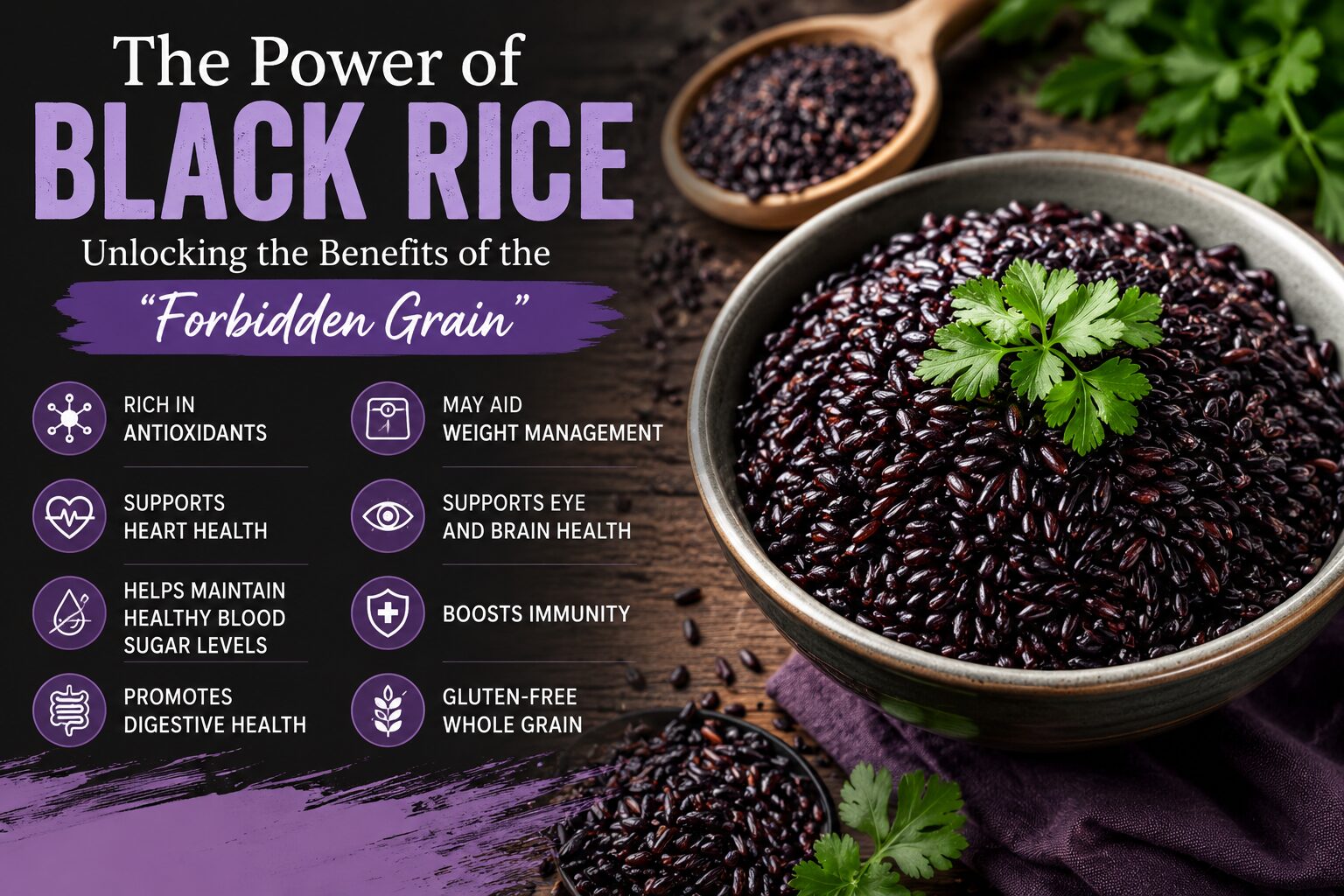
Black rice, often called the “Forbidden Grain,” has captured the attention of nutrition experts and food lovers around the world. Once reserved exclusively for Chinese royalty because of its rarity and impressive nutritional value, this dark-purple grain is now celebrated as one of the healthiest types of rice available. With its rich nutty flavor, chewy texture, and striking appearance, black rice is far more than a trendy superfood — it is a powerhouse of antioxidants, vitamins, minerals, and plant compounds that support overall wellness.
What Is Black Rice?
Black rice is a variety of rice from the species Oryza sativa. Unlike white rice, black rice retains its outer bran layer, which is packed with nutrients and antioxidants. Its deep black or purple color comes from anthocyanins — the same powerful antioxidants found in blueberries, blackberries, and purple cabbage.
Historically, black rice was considered so valuable in ancient China that common people were forbidden from eating it, giving rise to the nickname “Forbidden Rice.” Today, it is widely available and used in salads, bowls, soups, desserts, and healthy meal recipes.
Nutritional Profile of Black Rice
Black rice stands out nutritionally compared to white and even brown rice. It contains protein, fiber, iron, and several essential nutrients that support a balanced diet. According to nutrition experts, black rice is particularly rich in antioxidants and plant compounds that help protect the body from oxidative stress.
A typical serving of cooked black rice contains:
Protein
Dietary fiber
Iron
Magnesium
Zinc
Potassium
Vitamin E
Anthocyanins
Flavonoids
Because it is a whole grain, black rice also helps provide longer-lasting energy and better digestion than heavily processed grains.
Rich in Powerful Antioxidants
One of the biggest reasons black rice is considered a superfood is its exceptionally high antioxidant content. Studies show that black rice contains more antioxidant activity than many other rice varieties.
Antioxidants help combat free radicals in the body, reducing oxidative stress that may contribute to aging and chronic diseases. The anthocyanins in black rice are especially beneficial for protecting cells from damage and supporting long-term health.
Supports Heart Health
Black rice may help support cardiovascular health thanks to its fiber, antioxidants, and anti-inflammatory compounds. Anthocyanins have been linked to reduced inflammation and improved blood vessel function. Fiber also helps maintain healthy cholesterol levels.
Including whole grains like black rice in a balanced diet may contribute to better heart health and reduced risk factors associated with cardiovascular disease.
Helps Maintain Healthy Blood Sugar Levels
Unlike refined white rice, black rice has more fiber and nutrients that slow digestion and help stabilize blood sugar levels. Research suggests that the antioxidants and phytochemicals found in black rice may improve insulin sensitivity and reduce rapid spikes in blood glucose.
This makes black rice a smarter carbohydrate option for people seeking healthier eating habits and better energy balance throughout the day.
Promotes Digestive Health
The fiber content in black rice supports healthy digestion and gut health. Fiber helps regulate bowel movements, promotes fullness, and nourishes beneficial gut bacteria. A healthy digestive system is essential for nutrient absorption, immune function, and overall wellness.
Because it is naturally gluten-free, black rice can also be a suitable grain option for people with gluten sensitivities or celiac disease.
May Aid Weight Management
Black rice can be a helpful addition to a balanced weight-management plan. Its combination of fiber and protein promotes satiety, helping you feel fuller for longer periods. Whole grains are generally more satisfying than refined grains, which may help reduce unnecessary snacking and overeating.
Supports Eye and Brain Health
Black rice contains carotenoids such as lutein and zeaxanthin, nutrients associated with eye protection and reduced oxidative damage. These compounds may help protect the retina from harmful light exposure.
The antioxidants in black rice may also support brain health by helping reduce inflammation and cellular stress.
Delicious and Versatile in the Kitchen
One of the best things about black rice is its versatility. Its slightly sweet, nutty flavor pairs well with both savory and sweet dishes. You can use it in:
Grain bowls
Stir-fries
Salads
Soups
Sushi
Puddings
Healthy desserts
Black rice usually takes longer to cook than white rice, but soaking it beforehand can reduce cooking time and improve texture.
Are There Any Downsides?
Like most rice varieties, black rice may contain small amounts of naturally occurring arsenic from soil and water. Experts recommend rinsing rice thoroughly before cooking and enjoying it as part of a varied diet.
Moderation and variety remain key to healthy eating habits.
Final Thoughts
Black rice truly lives up to its legendary reputation as the “Forbidden Grain.” Packed with antioxidants, fiber, protein, and essential nutrients, it offers an impressive range of potential health benefits — from supporting heart and digestive health to helping maintain balanced blood sugar levels.
Whether you are looking to upgrade your diet, experiment with healthier whole grains, or simply enjoy a flavorful and visually stunning ingredient, black rice is a nutritious choice worth adding to your meals. Its rich history, remarkable nutrition, and culinary versatility make it one of the most exciting superfoods in modern kitchens today.
Disclaimer:
The information provided in this article is for educational and informational purposes only and is not intended as medical advice. Always consult a qualified healthcare professional or registered dietitian before making significant changes to your diet or health routine. Individual nutritional needs and health conditions may vary.