
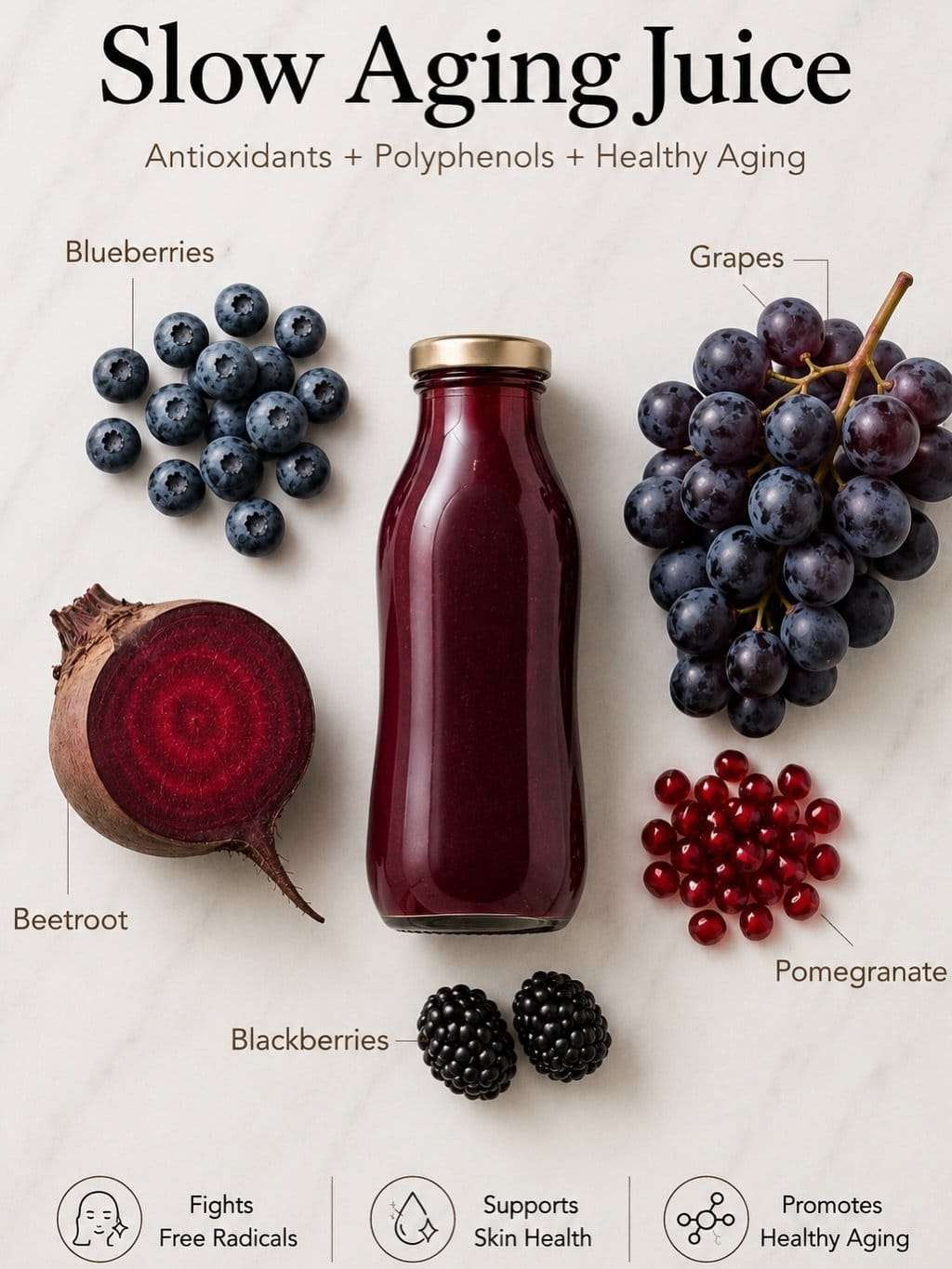
Polyphenol‑rich juices like “Slow Aging Juice” are marketed for their antioxidant and anti‑aging benefits, and current research supports that compounds such as resveratrol, quercetin, and EGCG can help regulate cellular aging pathways, reduce oxidative stress, and promote healthier skin and metabolism. These natural compounds are not a cure for aging but may contribute to extending healthspan when combined with a balanced diet and lifestyle.
🧪 What Are Polyphenols & Antioxidants?
- Polyphenols are plant compounds found in fruits like blueberries, grapes, pomegranates, and vegetables such as beets.
- They act as antioxidants, neutralizing free radicals that damage cells and accelerate aging.
- Common examples: Resveratrol (grapes), Quercetin (apples, onions), EGCG (green tea), Curcumin (turmeric).
🔬 How They Influence Aging
Recent scientific reviews highlight several mechanisms:
- Mitochondrial quality control: Polyphenols improve energy production and reduce mitochondrial dysfunction, a hallmark of aging.
- Cellular signaling: They regulate pathways like AMPK, sirtuins (SIRT), mTOR, and Nrf2, which control metabolism, inflammation, and stress resistance.
- Gut microbiome interaction: Polyphenols are metabolized into compounds such as urolithin A, which further enhance mitochondrial health.
- Anti‑inflammatory effects: They reduce chronic low‑grade inflammation linked to age‑related diseases.
🌟 Documented Benefits
- Skin health: Antioxidants protect collagen and elastin, slowing wrinkle formation.
- Brain function: Some polyphenols show neuroprotective effects, potentially lowering dementia risk.
- Cardiovascular support: They improve blood vessel function and reduce oxidative damage.
- Metabolic health: May help regulate blood sugar and lipid metabolism.
⚠️ Limitations & Risks
- Not a miracle cure: Juices and supplements cannot stop aging; they only support healthy aging.
- Dosage matters: Benefits are linked to consistent intake of polyphenol‑rich foods, not occasional consumption.
- Possible interactions: High doses of concentrated extracts may interfere with medications (e.g., blood thinners).
- Whole foods vs. supplements: Eating fruits and vegetables provides fiber and synergistic nutrients that juices alone may lack.
🍇 Practical Takeaway
- Incorporate berries, grapes, pomegranate, green tea, and leafy greens regularly into your diet.
- Juices like “Slow Aging Juice” can be a convenient source of antioxidants, but they should complement—not replace—a balanced diet.
- For maximum benefit, pair polyphenol intake with exercise, good sleep, and stress management.