
A Practical Guide for Everyday Hydration
Staying hydrated is one of the simplest ways to support overall health, but have you ever considered whether your water bottle choice matters? With options ranging from stainless steel and glass to copper, clay, and plastic, choosing the right bottle can affect durability, convenience, taste, and sustainability.
While no bottle is perfect for everyone, understanding the advantages and limitations of different materials can help you make an informed decision that fits your lifestyle.
Why Your Water Bottle Choice Matters
A good water bottle should:
- Be safe for storing drinking water
- Be easy to clean
- Fit your daily routine
- Be durable and long-lasting
- Help reduce single-use plastic waste
The best bottle is often the one you’ll consistently use and maintain properly.
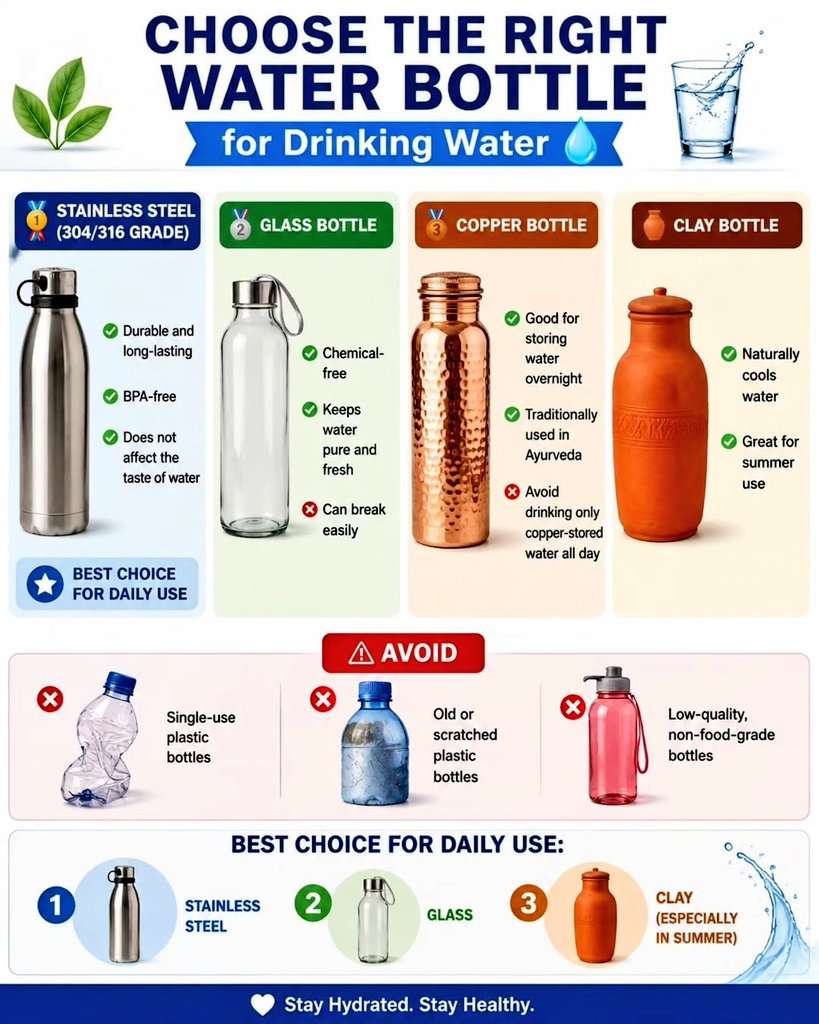
1. Stainless Steel Bottles
Stainless steel bottles are among the most popular choices for everyday hydration.
Benefits
- Durable and resistant to damage
- Long-lasting
- Does not easily absorb odors or flavors
- Available in insulated versions that keep drinks cold or hot for hours
- Reusable and environmentally friendly
Considerations
- Higher-quality food-grade stainless steel (such as 304 or 316 stainless steel) is generally preferred.
- May be more expensive than plastic options.
- Can dent if dropped repeatedly.
Best For
Daily use, travel, sports, commuting, and outdoor activities.
2. Glass Bottles
Glass bottles are valued for their clean taste and non-reactive nature.
Benefits
- Does not retain flavors or odors
- Easy to clean
- Transparent, allowing you to see the contents
- Suitable for both water and other beverages
Considerations
- More fragile than stainless steel
- Heavier than plastic bottles
- May require a protective sleeve
Best For
Home, office, and indoor use.
3. Copper Bottles
Copper bottles have been used traditionally in some cultures for storing water.
Benefits
- Attractive appearance
- Durable when properly maintained
- Traditionally used in certain wellness practices
Considerations
- Scientific evidence supporting special health benefits is limited.
- Excessive copper intake may be harmful.
- Copper bottles require proper cleaning and maintenance.
- Water should not be stored indefinitely in copper containers.
Best For
Occasional use and those who appreciate traditional designs.
4. Clay Bottles
Clay or earthenware bottles have been used for centuries.
Benefits
- Naturally cool water through evaporation
- Eco-friendly when made from natural materials
- Particularly refreshing in warm climates
Considerations
- Can break if dropped
- Quality varies depending on manufacturing methods
- Must be food-safe and free from harmful contaminants
Best For
Hot climates and traditional household use.
5. Plastic Bottles
Plastic bottles remain widely used due to their affordability and convenience.
Benefits
- Lightweight
- Inexpensive
- Easy to carry
- Available in many sizes and designs
Considerations
- Lower-quality bottles may wear down over time.
- Scratched or damaged bottles can become difficult to clean.
- Single-use plastic bottles are not designed for repeated long-term use.
- Environmental concerns are associated with disposable plastic waste.
Best For
Short-term use and situations where lightweight containers are needed.
Water Bottles to Avoid
Single-Use Plastic Bottles
These bottles are designed for temporary use and may become damaged after repeated refilling.
Old or Damaged Bottles
Regardless of material, bottles that are cracked, heavily scratched, chipped, or difficult to clean should be replaced.
Non-Food-Grade Containers
Always choose bottles specifically designed for food and beverage storage.
Tips for Keeping Your Water Bottle Safe and Clean
- Wash your bottle regularly with warm water and mild soap.
- Allow it to dry completely between uses.
- Clean lids, straws, and seals thoroughly.
- Replace worn or damaged parts.
- Follow manufacturer care instructions.
Proper cleaning is often more important than the bottle material itself.
Which Water Bottle Is Best?
For most people:
1. Stainless Steel
A durable, practical, and versatile option for everyday use.
2. Glass
An excellent choice for those who prefer a clean taste and primarily use their bottle at home or work.
3. Food-Grade Reusable Plastic
A lightweight and affordable option when properly maintained.
4. Clay and Copper
Useful for specific preferences and traditions but not necessarily superior from a health perspective.
Conclusion
Choosing the right water bottle comes down to balancing safety, durability, convenience, and personal preference. Stainless steel and glass are often considered excellent options because they are durable, reusable, and easy to maintain. Meanwhile, high-quality reusable plastic, clay, and copper bottles can also be suitable when used appropriately.
Ultimately, the healthiest water bottle is one that is food-safe, regularly cleaned, well-maintained, and encourages you to drink enough water throughout the day. Staying hydrated remains far more important than the specific material of the container you choose.
Disclaimer
This article is intended for educational and informational purposes only and should not be considered medical, environmental, or professional safety advice. The suitability of any water bottle depends on its manufacturing quality, maintenance, and intended use. Claims regarding special health benefits of specific bottle materials, including copper and clay, may not be fully supported by scientific evidence. Always follow manufacturer instructions for use and cleaning. If you have concerns about water quality, chemical exposure, metal sensitivities, or health-related issues, consult a qualified healthcare professional or environmental health expert.