
Nutrition, Benefits, and How to Enjoy Them
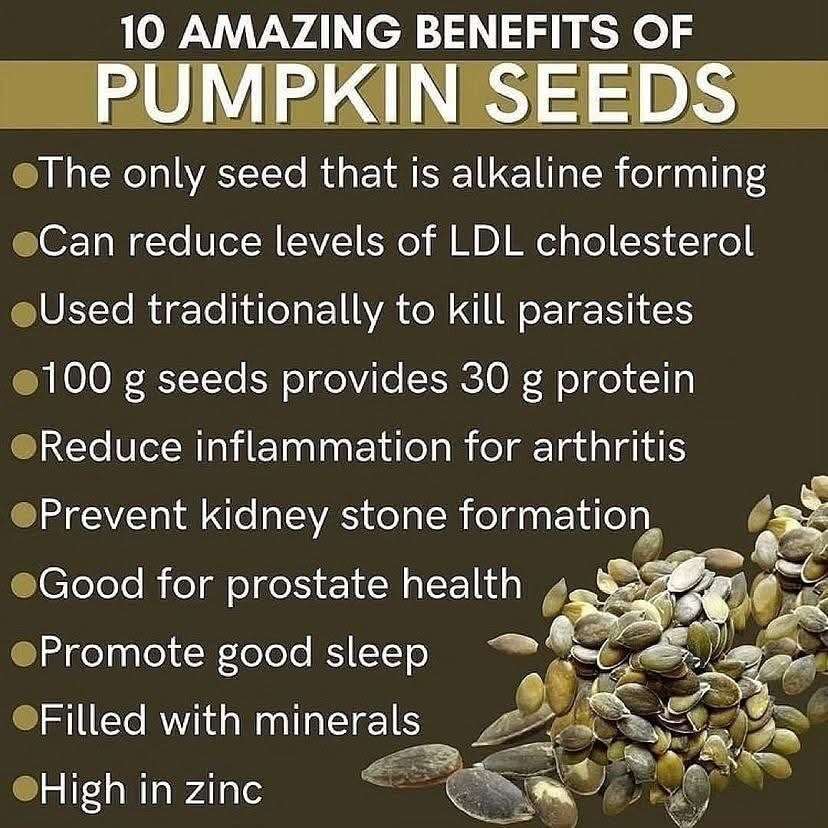
Pumpkin seeds, also known as pepitas, are small but incredibly nutrient-dense seeds packed with protein, healthy fats, fiber, vitamins, minerals, and antioxidants. Whether eaten as a snack, sprinkled over salads, or added to smoothies and baked goods, pumpkin seeds can be a delicious addition to a balanced diet.
Nutritional Powerhouse
A serving of pumpkin seeds provides a variety of important nutrients, including:
- Plant-based protein
- Healthy unsaturated fats
- Fiber
- Magnesium
- Zinc
- Iron
- Phosphorus
- Potassium
- Antioxidants such as vitamin E and carotenoids
These nutrients play important roles in supporting overall health and well-being.
1. Rich in Antioxidants
Pumpkin seeds contain antioxidants that help protect cells from damage caused by free radicals. Antioxidants support the body’s natural defense systems and contribute to overall health.
2. Supports Heart Health
The healthy fats, magnesium, and antioxidants found in pumpkin seeds may support cardiovascular health when consumed as part of a balanced diet. Magnesium helps maintain normal muscle and nerve function and supports healthy blood pressure regulation.
3. Good Source of Plant-Based Protein
Protein is essential for building and repairing tissues, maintaining muscle mass, and supporting many bodily functions. Pumpkin seeds provide a convenient plant-based protein option for vegetarians, vegans, and anyone looking to diversify their protein sources.
4. May Support Immune Function
Pumpkin seeds are rich in zinc, a mineral that plays a key role in immune system function, wound healing, and DNA synthesis. Adequate zinc intake is important for maintaining overall health.
5. Supports Bone Health
Magnesium and phosphorus, both found in pumpkin seeds, contribute to healthy bones and teeth. These minerals work together to support bone structure and overall skeletal health.
6. Helps Promote Satiety
The combination of protein, healthy fats, and fiber can help you feel fuller for longer. Including pumpkin seeds in snacks or meals may help reduce hunger between meals.
7. Source of Iron
Pumpkin seeds contain iron, a mineral needed for oxygen transport throughout the body and energy production. Plant-based iron sources can contribute to overall iron intake when consumed as part of a varied diet.
8. Easy to Add to Your Diet
Pumpkin seeds are versatile and can be enjoyed in many ways:
- As a roasted snack
- Sprinkled on salads
- Mixed into yogurt or oatmeal
- Added to smoothies
- Included in homemade trail mix
- Used in baking recipes
- Blended into sauces or pesto
Tips for Choosing and Storing Pumpkin Seeds
- Choose unsalted varieties when possible.
- Store in an airtight container.
- Keep them in a cool, dry place.
- Refrigerate for extended freshness.
- Check for signs of rancidity before consuming.
Conclusion
Pumpkin seeds are a nutrient-rich food that provides protein, healthy fats, fiber, vitamins, minerals, and antioxidants. They can support overall nutrition and make a convenient, versatile addition to a balanced eating pattern. Whether enjoyed on their own or incorporated into meals, pumpkin seeds offer a simple way to boost the nutritional value of your diet.
Disclaimer
This article is for educational and informational purposes only and should not be considered medical advice. No single food can prevent, treat, or cure disease. Individual nutritional needs vary based on age, health status, and lifestyle. If you have allergies, medical conditions, or concerns about your diet, consult a qualified healthcare professional or registered dietitian before making significant dietary changes.