
Introduction
Pressure injuries (also known as bedsores or pressure ulcers) occur when prolonged pressure reduces blood flow to the skin and underlying tissues. They are common in individuals with limited mobility, such as those confined to bed or wheelchair use, and can lead to serious complications if not addressed early. The good news is that most pressure injuries can be prevented with consistent, simple steps.
🌿 Key Prevention Strategies
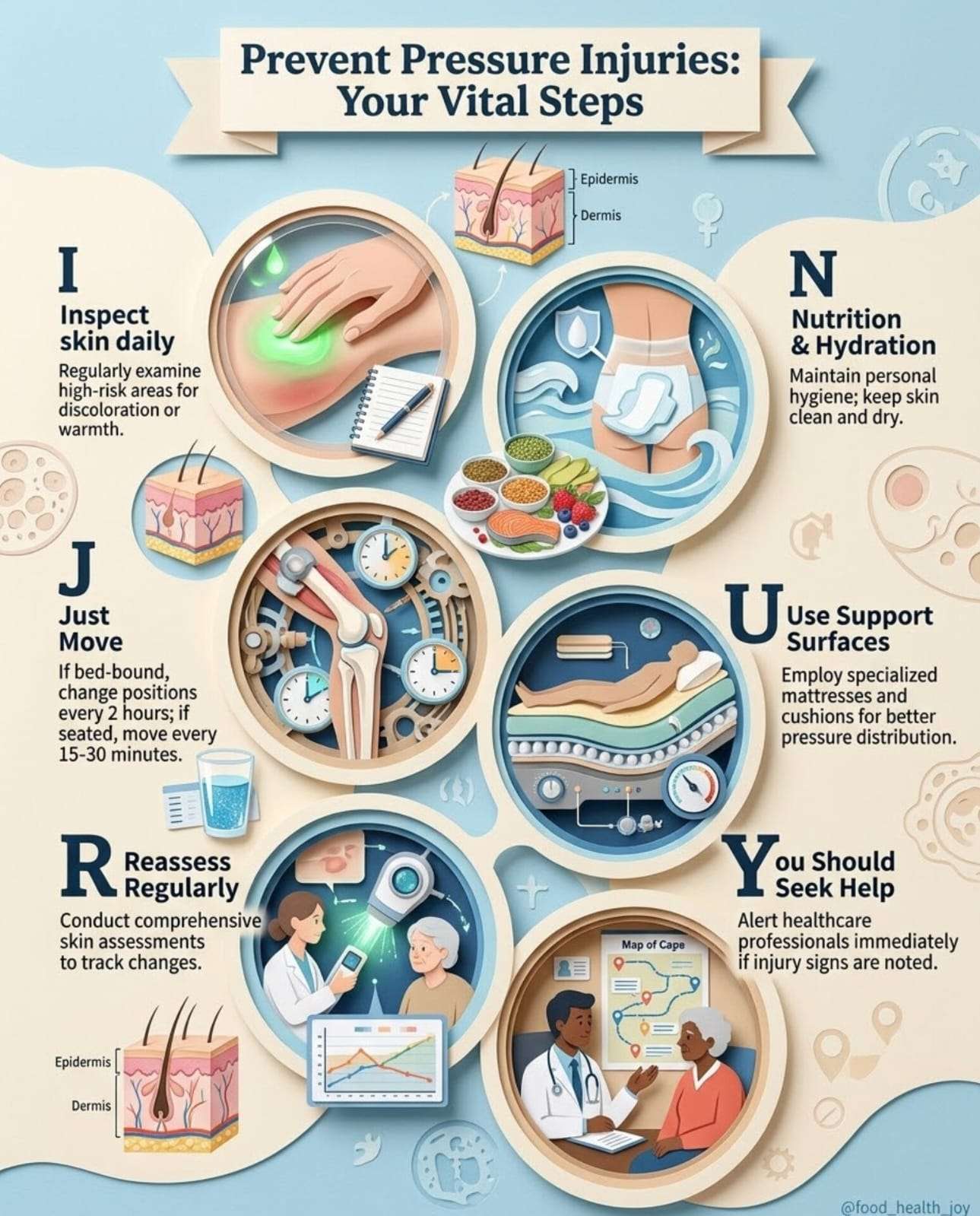
1. Regular Position Changes
- Reposition every 2 hours in bed and every hour in a chair.
- Use pillows or foam wedges to relieve pressure on bony areas like heels, hips, and tailbone.
2. Skin Care and Inspection
- Check skin daily for redness, swelling, or open areas.
- Keep skin clean and dry; moisture increases risk of breakdown.
- Apply gentle moisturizers to prevent dryness and cracking.
3. Nutrition and Hydration
- Eat a balanced diet rich in protein, vitamins (A, C, E), and zinc to support skin repair.
- Drink adequate fluids to maintain skin elasticity and circulation.
4. Support Surfaces
- Use pressure‑relieving mattresses, cushions, or overlays.
- Avoid hard surfaces that concentrate pressure on one area.
5. Mobility and Activity
- Encourage gentle movement and range‑of‑motion exercises.
- Even small shifts in posture can reduce pressure buildup.
6. Clothing and Bedding
- Choose soft, breathable fabrics.
- Avoid wrinkles in sheets and clothing that can rub against the skin.
7. Professional Monitoring
- Work with healthcare providers to assess risk using tools like the Braden Scale.
- Follow individualized care plans for high‑risk patients.
📊 Quick Reference Table
| Prevention Step | Action | Benefit |
|---|---|---|
| Position Changes | Every 2 hrs in bed, 1 hr in chair | Reduces prolonged pressure |
| Skin Care | Daily inspection, keep clean & dry | Early detection, prevents damage |
| Nutrition & Hydration | Protein, vitamins, fluids | Supports healing & resilience |
| Support Surfaces | Cushions, special mattresses | Distributes pressure evenly |
| Mobility | Gentle exercises, posture shifts | Improves circulation |
| Clothing & Bedding | Soft fabrics, smooth sheets | Prevents friction & irritation |
| Professional Care | Risk assessment, tailored plan | Comprehensive prevention |
⚠️ Disclaimer
This article is for general informational purposes only. It is not a substitute for professional medical advice, diagnosis, or treatment. Always consult a qualified healthcare provider for personalized guidance, especially if you or someone you care for is at risk of pressure injuries.
✅ This piece is structured for health education — practical, easy to follow, and safe with the disclaimer included.