
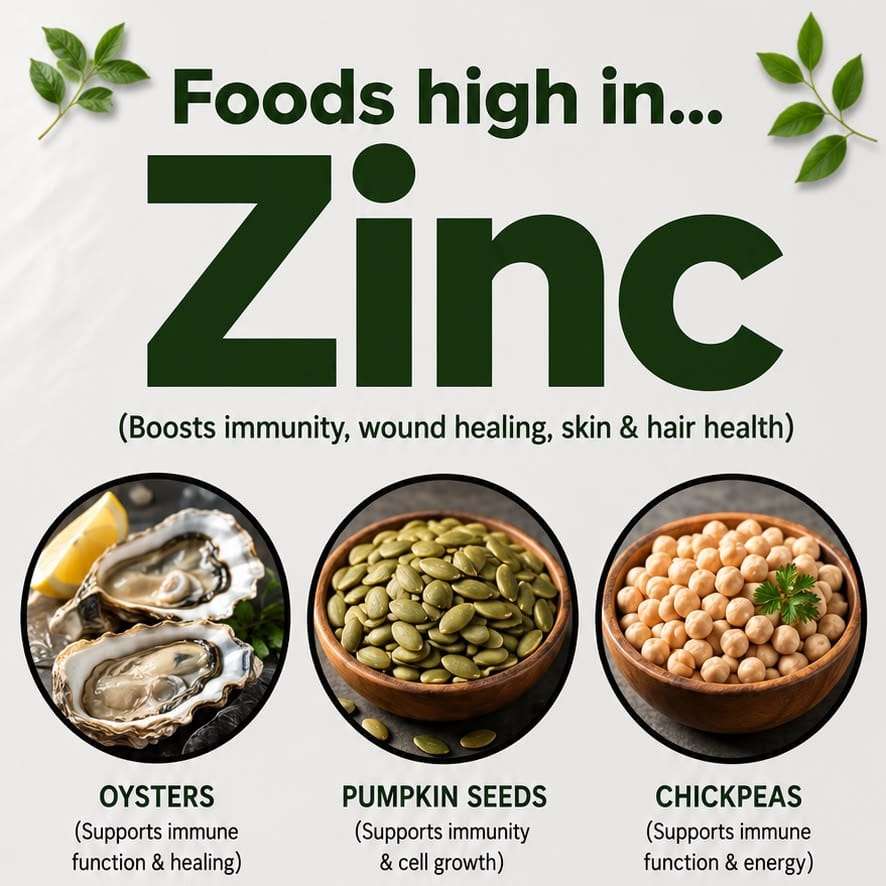
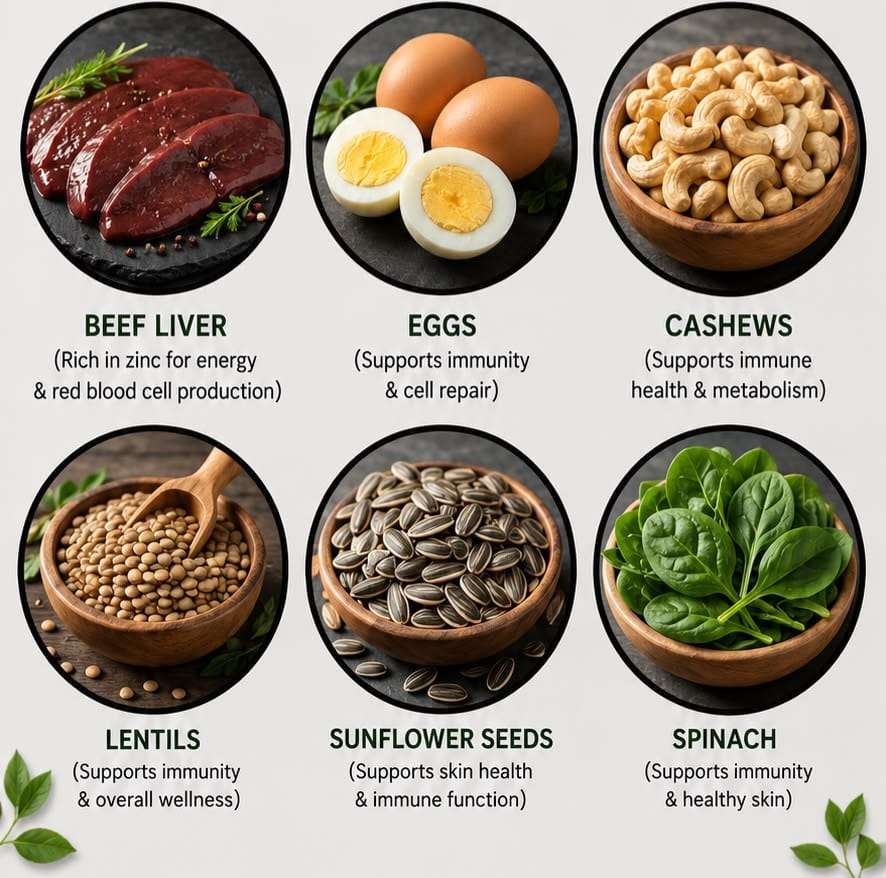
Foods richest in zinc include oysters, beef, pumpkin seeds, and legumes, making them essential for immune health, wound healing, and growth. Animal sources generally provide more bioavailable zinc than plant sources, though nuts, seeds, and fortified cereals are excellent vegetarian options.
🥦 Top Foods High in Zinc
| Food Category | Examples | Zinc Content (per serving) | % Daily Value (DV) |
|---|---|---|---|
| Shellfish | Oysters (2 oz raw) | 32 mg | 291% DV |
| Blue crab (3 oz cooked) | 3.2 mg | 29% DV | |
| Shrimp (3 oz cooked) | 1.4 mg | 13% DV | |
| Meat | Beef sirloin (3 oz roasted) | 3.8 mg | 35% DV |
| Pork loin (3 oz broiled) | 1.9 mg | 17% DV | |
| Poultry | Turkey breast (3 oz roasted) | 1.5 mg | 14% DV |
| Chicken thigh (rotisserie) | 1.4 mg | 13% DV | |
| Dairy | Cheddar cheese (1.5 oz) | 1.5 mg | 14% DV |
| Low-fat milk (8 oz) | 1 mg | 9% DV | |
| Legumes | Lentils (½ cup boiled) | 1.3 mg | 12% DV |
| Peanuts (1 oz dry roasted) | 0.8 mg | 7% DV | |
| Nuts | Pine nuts (1 cup) | 8.7 mg | 79% DV |
| Brazil nuts (1 cup) | 5.4 mg | 49% DV | |
| Seeds | Hemp seeds (3 tbsp) | 2.9 mg | 26% DV |
| Pumpkin seeds (1 oz roasted) | 2.2 mg | 20% DV | |
| Fortified Cereals | 1 serving | up to 2.8 mg | 25% DV |
🌟 Why Zinc Matters
- Immune support: Helps fight infections and supports wound healing.
- Growth & development: Essential for cell division and tissue repair.
- Skin health: Reduces inflammation and aids in skin repair.
- Reproductive health: Important for fertility and hormone regulation.
⚠️ Absorption Tips & Risks
- Animal vs. plant sources: Zinc from meat and shellfish is absorbed more efficiently than from legumes and grains.
- Phytates in legumes: Compounds in beans and whole grains can reduce absorption. Soaking, sprouting, or fermenting legumes improves bioavailability.
- Deficiency risk groups: Vegetarians, vegans, people with celiac disease, and those with chronic diarrhea may need extra zinc.
- Excess zinc: Too much can cause nausea, headaches, and interfere with copper absorption.
✅ Recommended Daily Intake
- Men: ~11 mg/day
- Women: ~8 mg/day
- Pregnant women: ~11–13 mg/day
- Breastfeeding women: Slightly higher needs (~12 mg/day)
📌 Disclaimer
This article is for educational purposes only. It is not a substitute for professional medical advice, diagnosis, or treatment. Always consult a qualified healthcare provider before making dietary changes or taking supplements, especially if you have underlying health conditions or are pregnant/breastfeeding.