

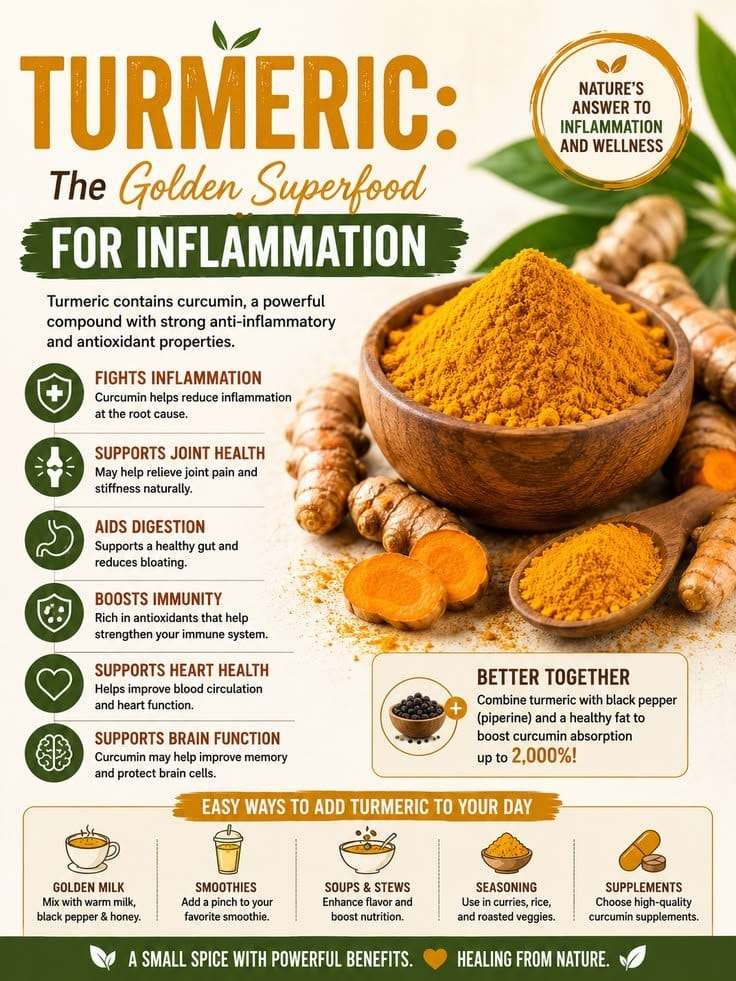
Turmeric, particularly its active compound curcumin, has been shown to reduce inflammation by modulating key pathways like NF-κB, COX-2, and cytokine production. While promising for conditions such as arthritis, cardiovascular disease, and metabolic syndrome, its low bioavailability limits effectiveness unless paired with enhancers like piperine.
🌿 Turmeric’s Anti-Inflammatory Benefits
1. Key Bioactive Compound
- Curcumin is the primary polyphenol in turmeric.
- It has antioxidant and anti-inflammatory properties that help regulate immune responses.
2. Mechanisms of Action
- Suppresses NF-κB pathway → reduces pro-inflammatory cytokines.
- Inhibits COX-2 enzyme → lowers production of inflammatory mediators.
- Regulates JAK/STAT and ERK signaling → balances immune cell activity.
3. Clinical Evidence
- Shown to improve biomarkers of inflammation and oxidative stress in human trials.
- Potential benefits in rheumatoid arthritis, cardiovascular disease, neurodegenerative disorders, and metabolic syndrome.
4. Limitations
- Low bioavailability: Curcumin is poorly absorbed in the body.
- Solutions include nanoparticle delivery systems, liposomal formulations, or combining with piperine (black pepper extract) to enhance absorption.
⚠️ Risks & Considerations
- Not a replacement for medical treatment: Turmeric supplements should not substitute prescribed anti-inflammatory drugs.
- Possible side effects: High doses may cause digestive upset or interact with blood thinners.
- Quality matters: Supplements vary widely; standardized extracts are more reliable.
✅ Practical Use
- Dietary inclusion: Add turmeric to curries, soups, teas, or smoothies.
- Supplementation: Look for curcumin with piperine or advanced delivery systems.
- Consistency: Benefits are linked to regular use over time.
📌 Disclaimer
This article is for informational purposes only. While turmeric and curcumin show anti-inflammatory potential, they should not replace professional medical advice, diagnosis, or treatment. Always consult a qualified healthcare provider before starting supplements, especially if you have chronic conditions or take prescription medications.