

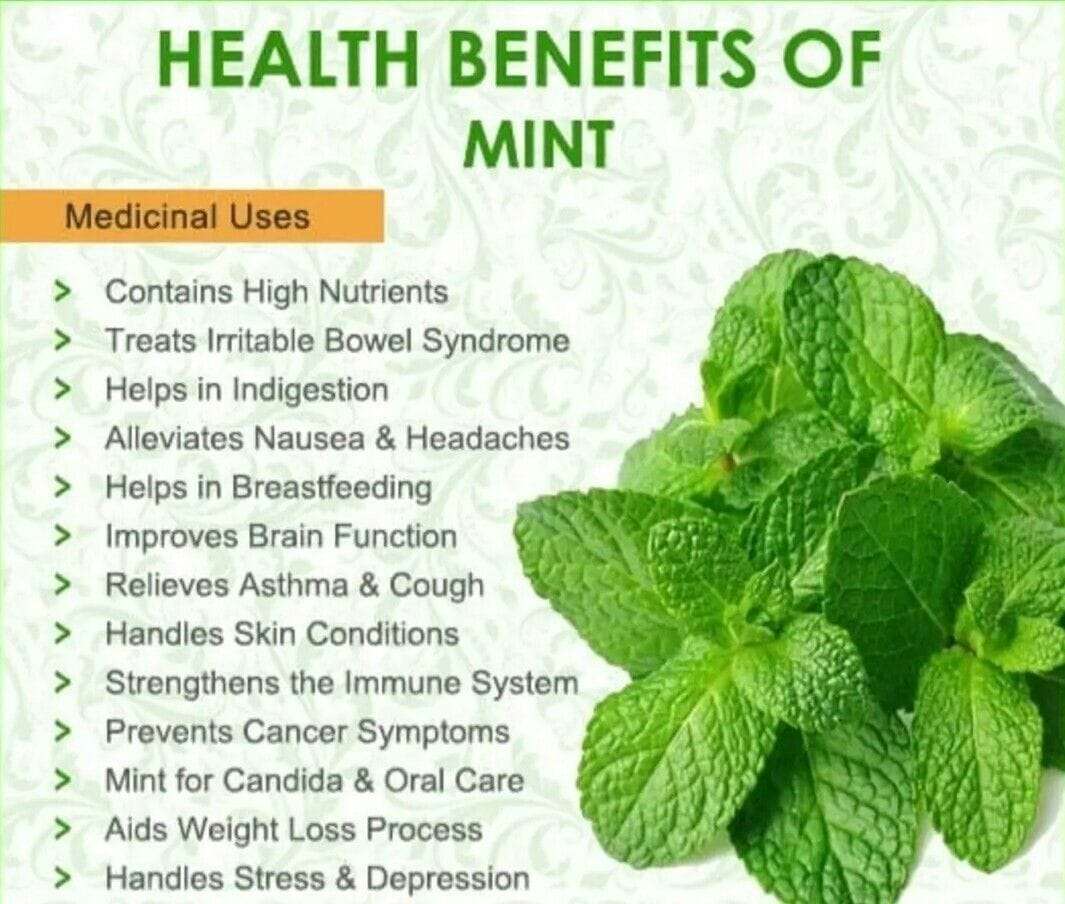
Mint is more than a refreshing herb—it supports digestion, oral health, and may ease symptoms of irritable bowel syndrome (IBS). Peppermint oil capsules show the strongest evidence for reducing bloating and abdominal pain, while fresh mint and teas can help with mild discomfort.
🌿 Key Health Benefits of Mint
1. Digestive Support
- Relieves indigestion and bloating by relaxing smooth muscles in the digestive tract.
- Peppermint oil capsules are clinically shown to reduce IBS symptoms such as abdominal pain, gas, and cramping.
2. Oral Health
- Mint oils reduce bacteria linked to cavities, gum disease, and bad breath.
- Chewing fresh leaves or using mint-based mouthwash adds antimicrobial protection.
3. Respiratory Relief
- Menthol in mint activates cold-sensing receptors in nasal passages, creating a cooling sensation that feels like easier breathing.
- Commonly used in inhalants and balms for congestion.
4. Nutrient Content
- Rich in vitamin A, iron, manganese, and antioxidants.
- Even small amounts provide eye health support and protection against oxidative stress.
5. Cognitive Benefits
- Mint aroma may improve alertness and memory.
- Some studies suggest peppermint oil can enhance brain function and reduce fatigue.
6. Skin & Topical Uses
- Mint extracts can soothe itching and irritation when applied to the skin.
- Menthol provides a cooling effect, often used in creams and ointments.
⚠️ Risks & Considerations
- Heartburn/Reflux: Peppermint may relax the lower esophageal sphincter, worsening reflux in some people.
- Capsule use: Enteric-coated peppermint oil capsules are safest; consult a doctor before use, especially if on medications.
✅ Practical Ways to Use Mint
- Tea: Brew fresh or dried leaves for soothing digestion.
- Cooking: Add to salads, sauces, smoothies, or desserts.
- Aromatherapy: Use peppermint oil for mental clarity and congestion relief.
- Topical: Apply diluted mint oil for cooling relief on skin.